“Don’t steal from our parents!”
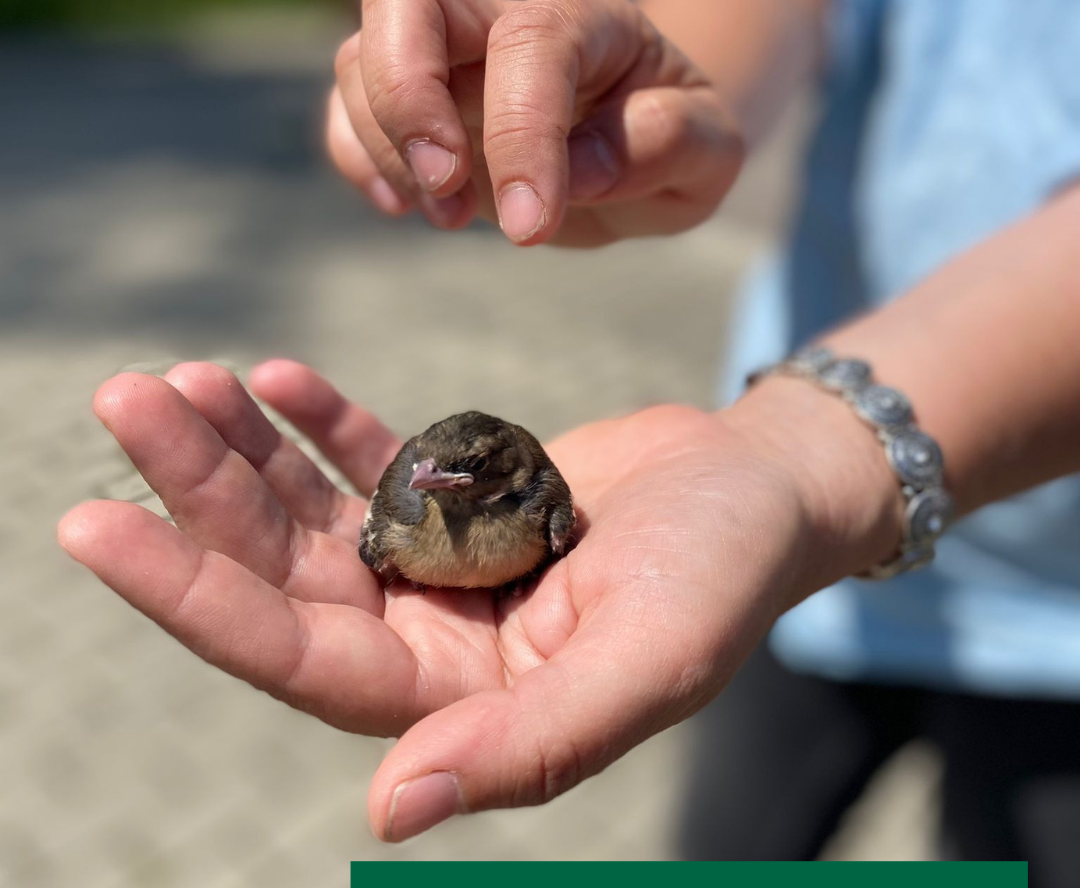
This is probably how the young birds would express themselves, which these days have flown out of the nests where they hatched, but do not yet have long enough flight feathers (feathers on the wings) to be able to fly fully. Many small songbirds are now hiding in the taller grass and under bushes, where they wait for the arrival of their parents to feed them.
If you collect them in good faith and bring them to rescue or breeding stations, you are not really helping them. We cannot provide a full-fledged, sufficiently varied diet for the young, nor can we teach them where to look for suitable shelters, food and other useful things for life, like their parents.
Songbirds tend to have a higher number of young than birds of prey because they are part of food chains and many of them do not live to adulthood. However, those that survive can ensure the prosperity of the species. Often it is 1-2 chicks from one nesting.
If you really want to help them:
 Leave taller grass on part of the lawns where the young can hide let bushes grow on your property, where they will also find shelter, a pile of rye or trimmed branches will also help (in addition to birds, hedgehogs and other species) At the time of flying out of the chicks, take better care of your pets – birds bitten by a cat usually die, fractures of small wing bones cannot be fixed and healed to a full-fledged wing function If you have a cat, a specialist in bird hunting, prevent it from sneaking up on the birds with a bell or temporarily close it Do not bring collected chicks from nature to rescue facilities unless you have observed that the bird’s parents have not returned to them for at least 3 hours – they usually return within a few minutes, depending on the species and age of the chick Only obviously injured birds belong to rescue facilities.
You can recognize the chicks by the thicker yellow edge of the beak in the corners, short feathers on the wings and tail, the remnants of down on the head or other parts of the body.
If you are not sure whether it is a cub and whether it needs to be taken from nature, it is better to call the emergency numbers of rescue facilities in advance.
Thank you on behalf of the young birds and their caring parents 
Text: Ing. M. Apfelová – zoologist of the Administration of the Veľká Fatra National Park
Photo: Ing. C. Paľová