PRINCIPLES OF SAFETY AND PREVENTION IN AREAS WHERE THE BROWN BEAR (Ursus arctos) occurs
In order to minimize the risk of encountering a brown bear and ensure your own safety, observe the following precautions:
- Time schedule of activities: We recommend exercising in nature during daylight hours. Avoid activities at dawn, dusk and during the night.
- Use of infrastructure: Strictly follow the marked hiking and educational trails.
- Monitoring the surroundings: pay close attention to the bear’s signs of residence (e.g. excrement, tracks, bear trees).
- Collective movement: In locations with an increased probability of bear occurrence, it is recommended to move in a group.
- Acoustic expressions: Draw attention to your presence with appropriate communication or other sound manifestations (whistle, clapping).
- Movement in unclear terrain: Avoid obscure locations and places with natural occurrence of food. When the visibility of the terrain is reduced, proceed especially carefully and slowly.
- Adverse conditions: Be vigilant in environments with high noise levels (e.g. torrents, rain or strong winds) that make it impossible to detect animals early.
- Finding of juveniles and cadavers: In case of sighting juveniles or dead animals (cadavers), it is necessary to leave the site immediately and safely.
- Pets under control: Pets (dogs) must be kept on a leash when moving in the field.
- Hygiene in the field: Pay attention to the cleanliness of the environment during all outdoor activities. It is strictly forbidden to leave food leftovers near tourist huts or marked trails.
Recommended procedure when encountering a brown bear
Visual contact
If you notice a bear at a greater distance, it is recommended to calmly retreat and slowly return towards the starting point. Maintaining balance is an important factor. Do not approach the animal in any case, even if it shows signs of calm.
Warning: If the bear stands on its hind legs, it tries to get a better visual overview of the surroundings; It is not a manifestation of aggression. Your behavior must not make the animal feel threatened, which could lead to a defensive attack.
Close clash
In case of imminent contact, draw attention to your presence in a calm and low voice. Avoid direct eye contact, but monitor the animal’s behavior peripherally. Avoid sudden movements, running, or turning your back to the bear. Leave the site in a slow and controlled manner in a reverse direction. As part of self-defense, the bear can perform a deceptive lunge in order to warn the intruder and force him to move away. However, in the event of an inappropriate reaction on the part of a person, this behavior can escalate into a direct attack.
Direct confrontation and attack
- Application of a defensive tool: If you have a bear defensive device, use it immediately. The purpose of the spray is to paralyze the attacking animal and gain the time needed to safely retreat.
- Passive defense: In case you do not have a defensive spray available, take a defensive position – lie on your stomach facing the ground, protecting the head and neck area with your upper limbs. Remain motionless in this position until the animal has completely left the scene of the incident.
False attack: The bear runs towards a person, but usually stops at a distance of 2 to 3 meters. The goal of this behavior is to intimidate the intruder, test his reaction and force him to leave the territory, after which, as a rule, the beast changes direction and leaves. In this situation, it is essential to stay calm and not run away.
Instructions for using the defensive spray
The defensive spray serves as a means of eliminating aggressive behavior of game. The applied substance provokes acute irritation of the mucous membranes (eyes, oral cavity) and respiratory system. The subsequent difficulty in breathing and temporary loss of vision lead to disorientation of the attacking individual, which interrupts the attack and reduces his ability to focus on the target.
Operating instructions and handling:
- Availability: Keep the product in a place that allows immediate use (within reach).
- Activation: In case of danger, hold the container firmly in the palm of your hand and use your thumb to unlock the safety lock towards you.
- Aiming: Direct the spray with a slight inclination towards an approaching bear, ideally at a distance of at least 12 m.
- Application: Short and complete pull of the trigger to create a protective barrier in the form of an aerosol cloud. In case of persistent aggression after the animal comes into contact with the cloud, keep the trigger pressed continuously and direct the stream directly at the individual’s head. (The jet range is 7-10m depending on weather conditions. When the trigger is pulled to the maximum, the total operating time is approximately 6 seconds or more). By hitting the target area with an irritating aerosol, the bear is temporarily disoriented (blinded) and the attack is eliminated, thus providing the necessary time interval to safely leave the danger zone.
- Leaving the area: After averting the threat, it is necessary to immediately leave the scene of the incident, including its wider surroundings.
Warning: The product contains capsaicin, which causes intense irritation of the mucous membranes and skin.
In case of undesirable exposure of persons, proceed as follows:
- Decontamination of the area: Immediately leave the affected area and remove contaminated clothing.
- First aid (skin): Rinse the affected areas with lukewarm soapy water for 10-15 minutes.
- First aid (eyes): Do not rub your eyes. Rinse them by immersing your face in water.
- Neutralization: It is recommended to use a specialized decontamination spray to mitigate the effects.
- Medical advice: If symptoms and burning persist , it is essential to seek professional medical treatment.
Storage and disposal:
- Storage: Do not expose the spray to extreme temperatures (e.g. in a vehicle), direct sunlight or prolonged frost.
- Safety: Keep out of reach of children.
- Check: Verify the integrity of the packaging and the expiration date before use.
- Disposal: Dispose of empty or unusable packaging in accordance with hazardous waste management regulations.
Pursuant to Section 65a (1) of Act No. 543/2002 Coll. on Nature and Landscape Protection, as amended, the State Nature Conservancy of the Slovak Republic is a professional organization of nature and landscape conservation with nationwide competence established by the Ministry as a contributory organization that provides tasks in the field of nature and landscape protection under this Act and special regulations, except for tasks, which are within the competence of the National Park Administration pursuant to § 65b par. 3. Section 65b (3) of the said Act authorizes the administration of the national park to ensure the scaring, capture or killing of protected animals whose behaviour outside the places of their natural occurrence directly threaten the health or safety of the inhabitants of municipalities adjacent to the SOP SR.
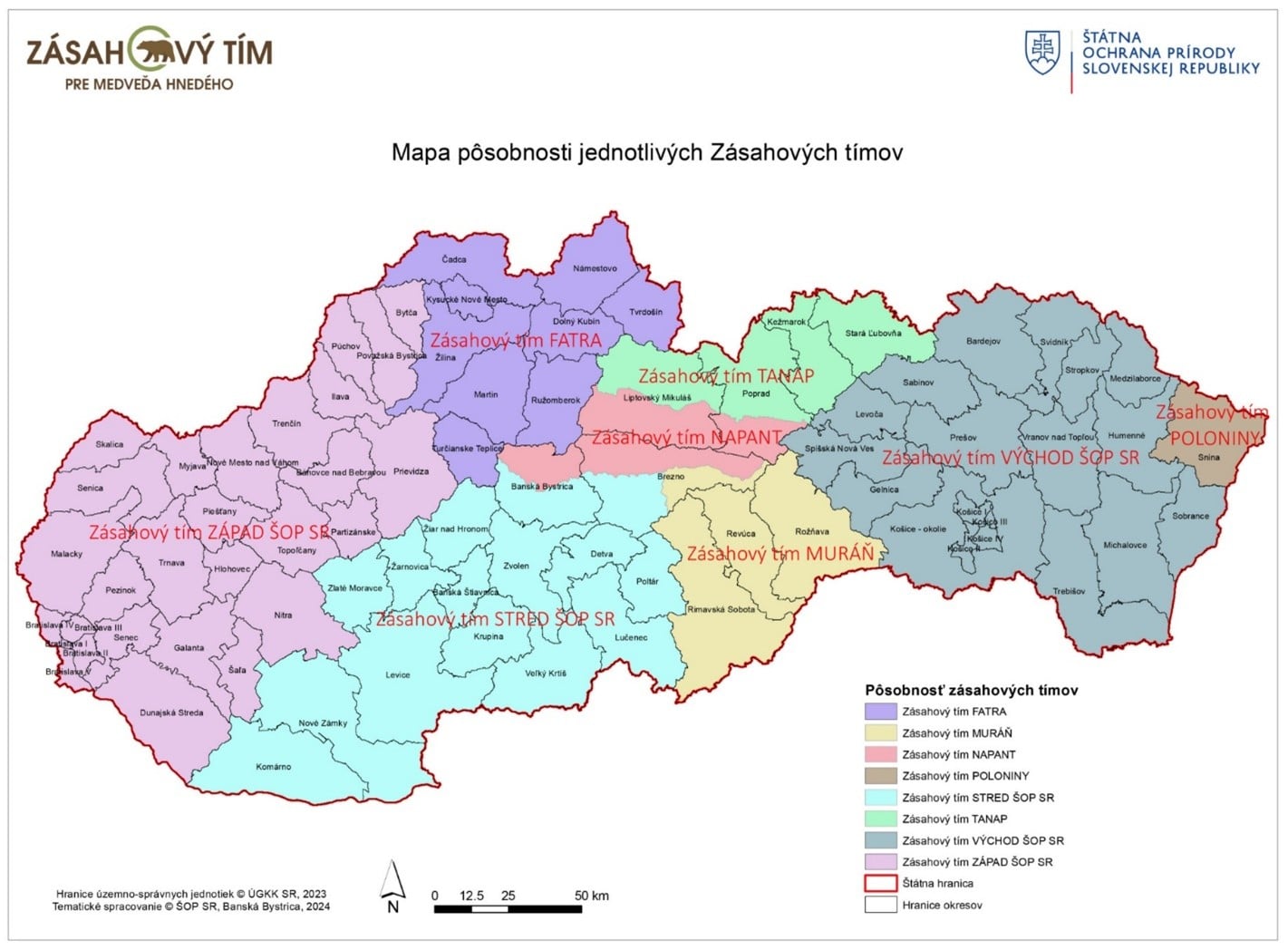
On 01.04.2025, the members of the Intervention Team were included in the structure of the Administration of the Veľká Fatra National Park based in Martin, which operates in 9 districts in the Žilina Region, namely: Čadca, Dolný Kubín, Kysucké Nové Mesto, Martin, Námestovo, Ružomberok, Turčianske Teplice, Tvrdošín and Žilina. The main task of the Brown Bear Intervention Team is to minimize conflicts between humans and bears, prevent damage caused by this beast and ensure the protection of residents, especially in built-up areas of cities and villages.
The ZTMH – Fatra emergency line is active 24 hours a day. on the phone number: 0910 658 615
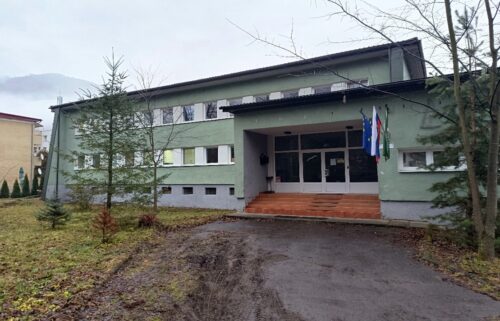
The ZTMH – Fatra workplace has its registered office at the address: Lipová alej 266/12, 03491 Ľubochňa.
Emergency lines of the Intervention Team
+421 910 406 418 – West Intervention Team
+421 903 201 879 – Central Intervention Team
+421 910 406 581 – East Intervention Team
+421 903 987 628 – TANAP Intervention Team
+421 903 201 978 – NAPANT Intervention Team
+421 910 658 615 – FATRA Intervention Team
+421 910 195 790 – MURÁŇ Intervention Team
+421 911 011 382 – POLONINY Intervention Team
Emergency Call Lines:
112 – Emergency Line
158 – Police
18 300 – Mountain Rescue Service