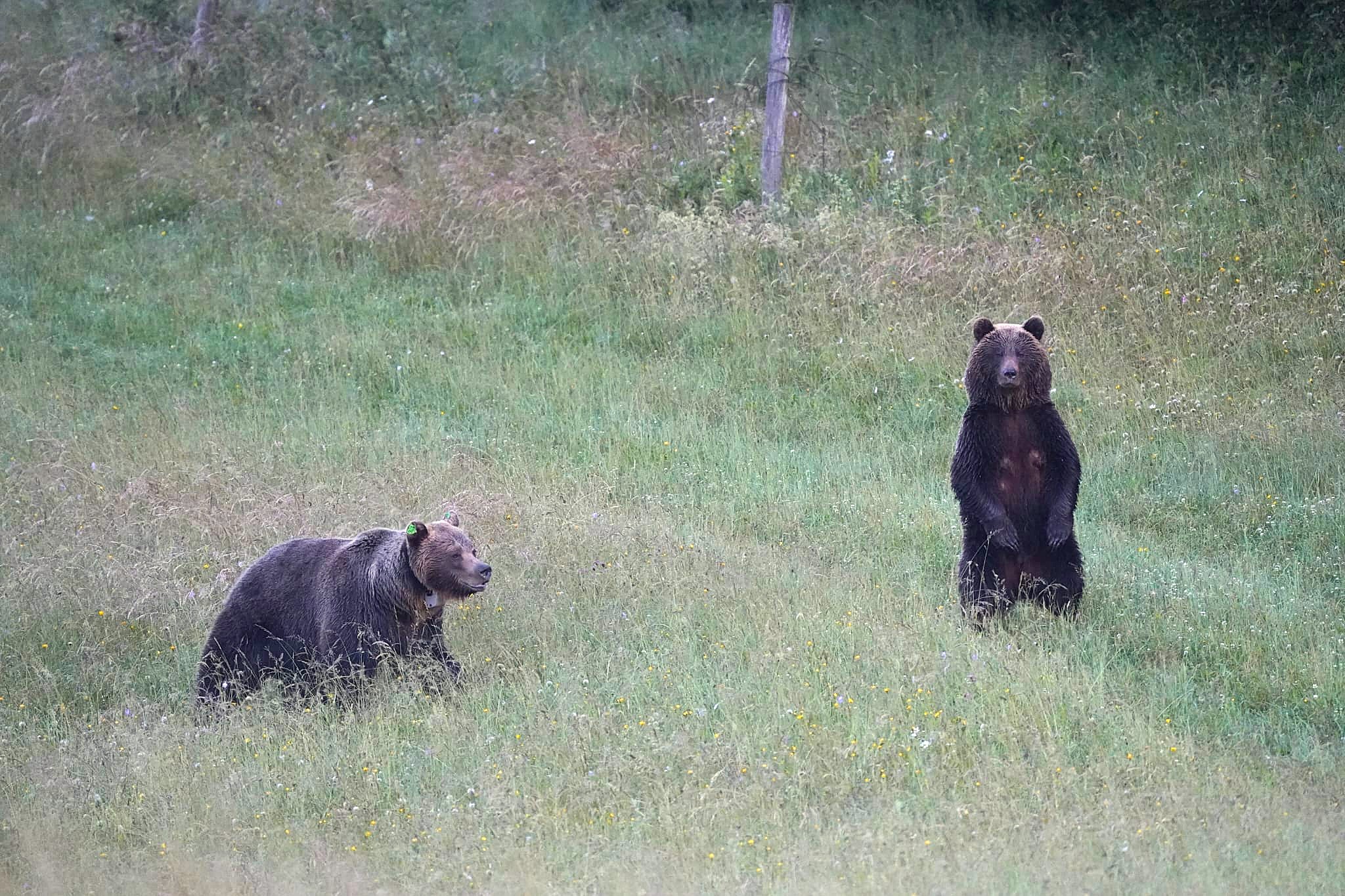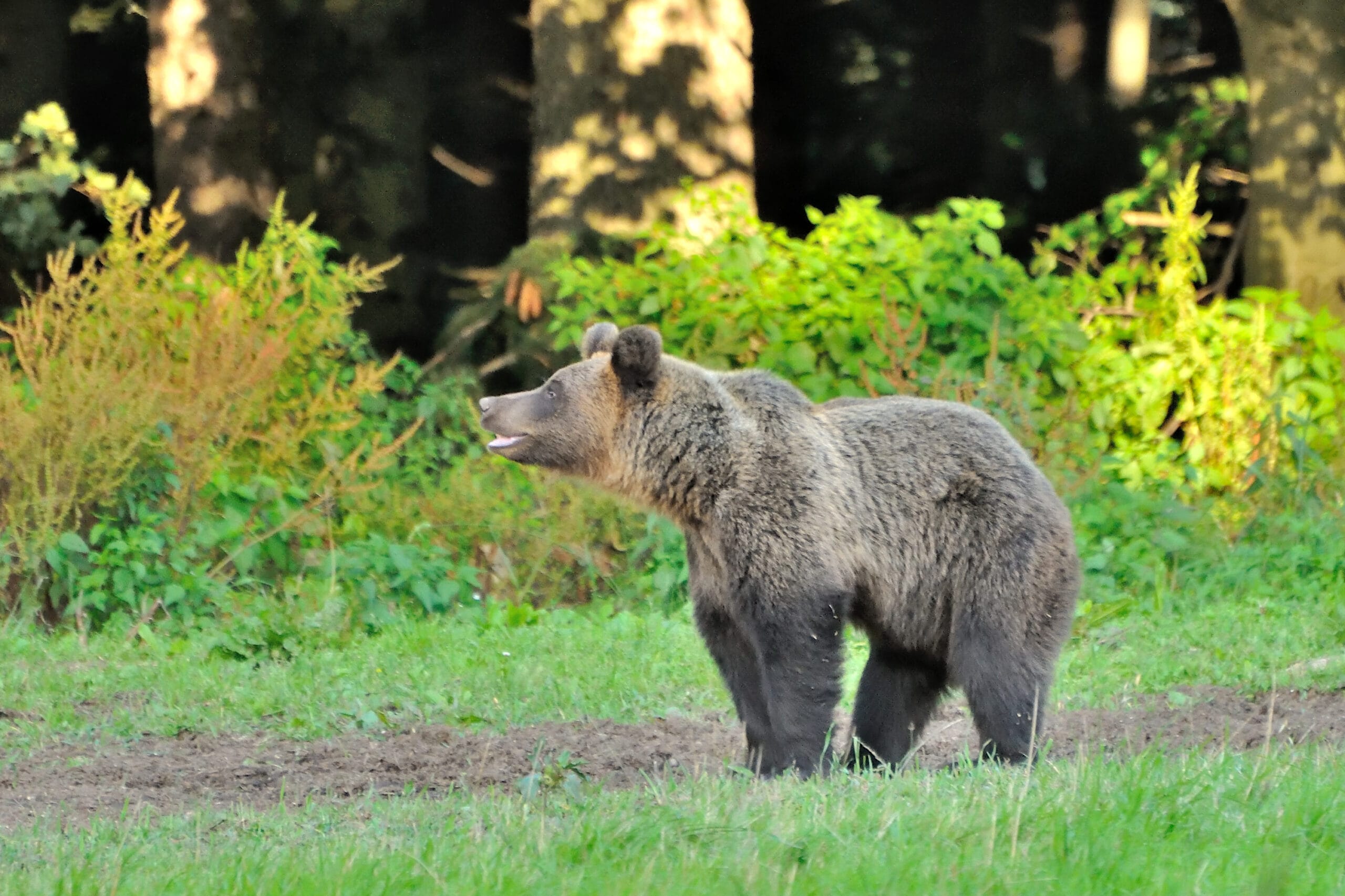
Although the brown bear has a wide range of food sources, it is still dominated by agricultural crops, which are often inappropriately planted. This results in frequent traffic collisions on the road and railway, when individuals pass from one field they like to another, across the road. And secondly, by planting a number of attractants, such as corn, which results in an increase in the occurrence of several individuals in a small area and their increased migration between fields. Among other things, people in the urban areas of municipalities grow crops (cereals, vegetables, legumes) and thus offer brown bear individuals a food source directly near their home. They apply this cultivation both in the garden, which is not often fenced, and outside of it, outside the fence of the property, where the bear has easy access and where it can stay at various intervals of occurrence throughout the harvest season. There is no need to avoid and limit cultivation, but it is necessary to consider a suitable place, ensure easy access and choose suitable crops to prevent its visit and subsequent consumption and damage in the urban area and in the vicinity of humans.
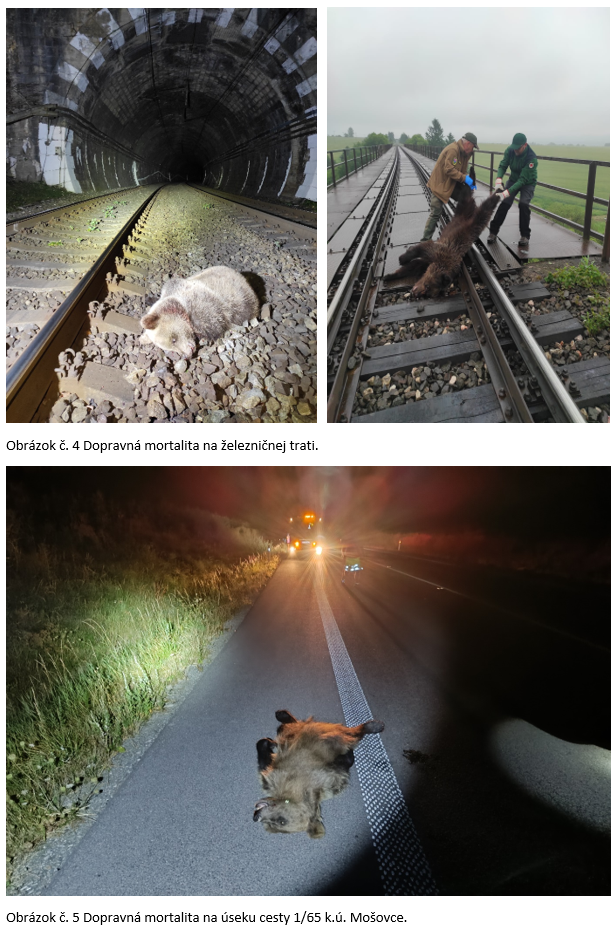
In recent years, there has been a decrease in areas with maize monocultures in the area of competence of the Veľká Fatra National Park in the Turiec Basin. This is due to better and systematic communication with agricultural entities in the area. ZTMH – Fatra is trying to appeal to individual agricultural entities. If possible, it communicates the issue in such a way as to reduce the area of maize monocultures, especially on plots that border roads. These are mainly roads 1/65 and 1/18, which are heavily trafficked. On the road 1/18 in the Martin district, I register two critical sections from the point of view of the collision of a brown bear with means of transport. One collision section was identified between the Lučenská Malá Fatra and Krivánska Malá Fatra mountains on the mentioned road 1/18. The narrowed section between the two mountains, in which the Váh River flows and the river level is naturally low, is used by several species of large vertebrates as a migration corridor. In this narrowed line, there are grouped public roads, consisting of the main road 1/18, a double-track railway line, the Váh River and a narrow line of a fragment of floodplain forest, which forms the ecotone of the Váh River.
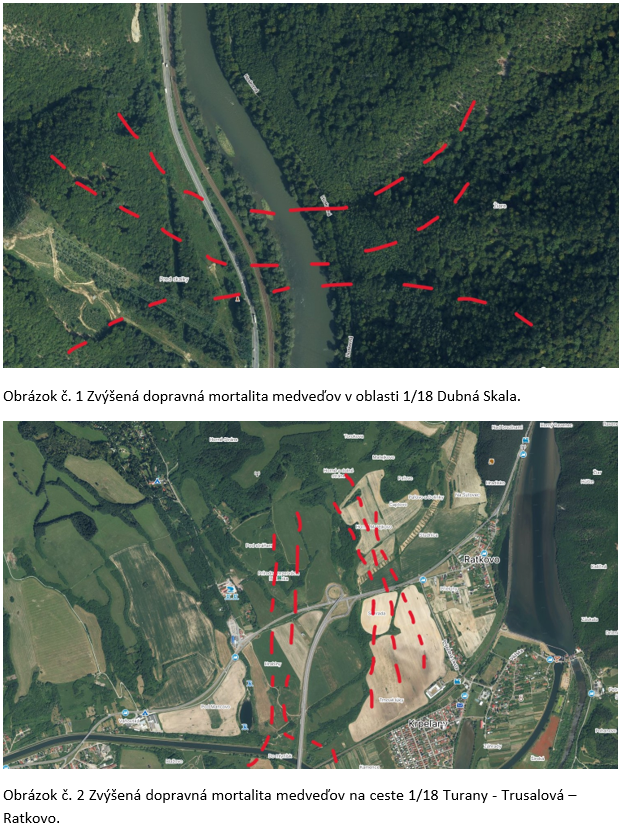
Another identified collision section with increased traffic mortality on road 1/18 is located in the section between the town of Turany, part of Trusalová and the village of Ratkovo. In addition to natural migration, the highly frequent movement of brown bears and other animals is enhanced by the cultivation of agricultural crops, which are highly attractive from a food point of view, as well as inappropriately selected cultivation of crops up to the border of roads. It should be noted that the aforementioned roads are the main transport hub between the east and west of Slovakia.
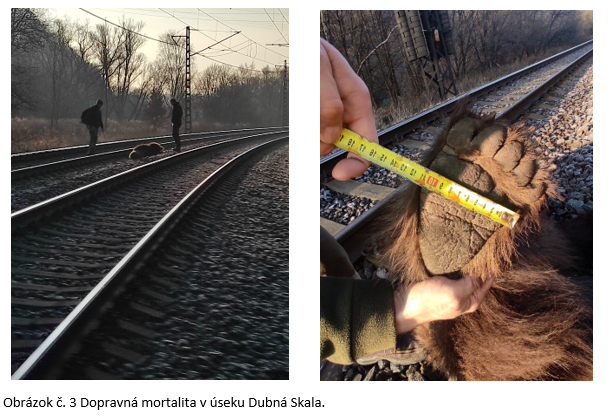
The affected critical sections are also problematic from the point of view of migration of other protected animals as well as game, which are often injured or killed by means of transport. With a strong traffic load, these sections create a very difficult barrier for the aforementioned animals. Road fatalities and dangerous traffic accidents regularly occur on collision sections, where road users themselves are endangered. In part, the risk can be reduced in some sections by using agricultural crops other than maize. Likewise, extensive maize monocultures accumulate a local population of brown bears, which can be tolerated in a relatively small area for several months until the harvest season comes. After mowing these areas in the Turčianska basin, there is a random migration of individuals in different directions for several weeks, during which collisions often occur on the roads. In the 2024 season, we identified large areas of corn in the cadastral area of Turčianske Jaseno, further in the cadastral area of Turčianske Jaseno. Mošovce behind the road 1/65 to the west to the Žiar mountain range and near the village of Sučany. Compared to last year, the area of maize monocultures has decreased significantly. This season, we have also identified areas sown with the crop Milk thistle (Silybum marianum), in which the same cumulative effect of the concentration of the local bear population has been confirmed. Bears probably do not use it as food, but they are attracted to this crop primarily for cover and daily rest. In the evening, they leave it en masse and move to agrocenoses and gardens with fruit trees for food. We observed this phenomenon in the cadastral area of the village of Mošovce.
Text: Ing. Juraj Žiak, Peter Rechtorík
Photo: Archive of the report