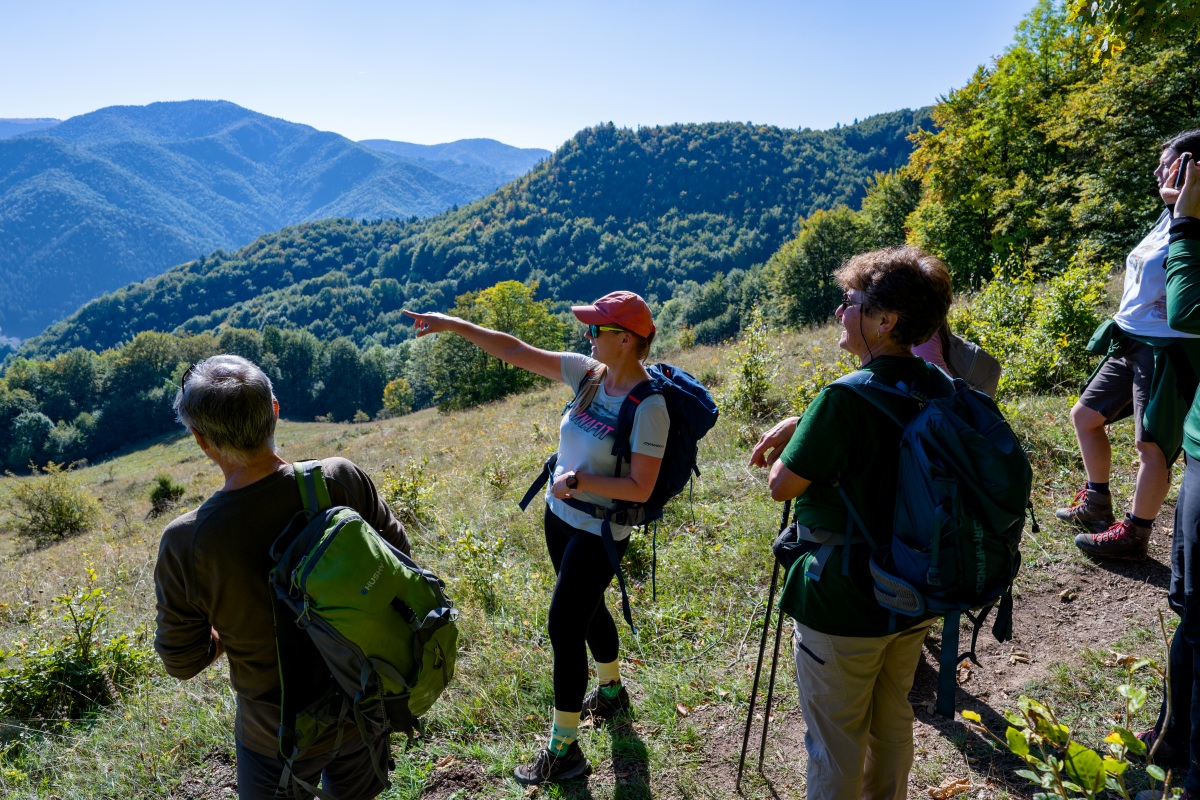
The main goal was to test the proposed experiential trail in practice, while also creating space for networking and sharing experience among national park staff.
The programme “When Grazing Happens, the Meadow Comes Alive – following the story of shepherds’ huts and the living landscape of Veľká Fatra” was developed by Ivana Vasiľová and links the area’s natural and cultural heritage with traditional farming, the local community, and local products. “My aim was to show visitors that the landscape is not only a place for recreation and nature conservation, but also the result of a long-term relationship between people and the land, and how it is managed,” said Vasiľová. As she added, Liptovské Revúce is an area with a strong historical connection to sheep farming and Wallachian culture. Traditional shepherding and the grazing of livestock were part of local life for centuries and shaped the character of the surrounding landscape. Even today, sheep farming and processing sheep’s milk remain an important part of local agriculture and of preserving the area’s traditional character.
Traditional farming as a tool for caring for the landscape
The route starts at the church in Liptovské Revúce and continues through the Malá Turecká valley along the red hiking trail, which is also part of the Čierny Kameň Nature Trail. At the start, Ivana Vasiľová introduced us to the village’s history, its location, and how settlement developed over time. In the Marčekovo area, she focused in more detail on the history of shepherding and the traditional management of mountain and foothill meadows. We learned how the shepherds’ huts operated, what everyday life was like for shepherds, and what roles the simple wooden buildings high above the village once served. The interpretation also explained why regular grazing of livestock is important for maintaining open landscapes and preserving species-rich meadow communities.
At this point, cultural tradition naturally connected with nature conservation. Traditional farming is not only part of the region’s history—it can also be one of the tools for caring for the landscape. Grazing helps maintain meadow habitats, prevents them from becoming overgrown, and contributes to preserving the distinctive landscape character of Veľká Fatra.
An experiential tasting
The expert part of the programme continued with a botanical interpretation. Viktória Chilová introduced the plant communities typical of this area and highlighted the link between farming practices and the species diversity of meadow vegetation. This gave us a more complete view of the area—from its history and traditions to its ecological context.
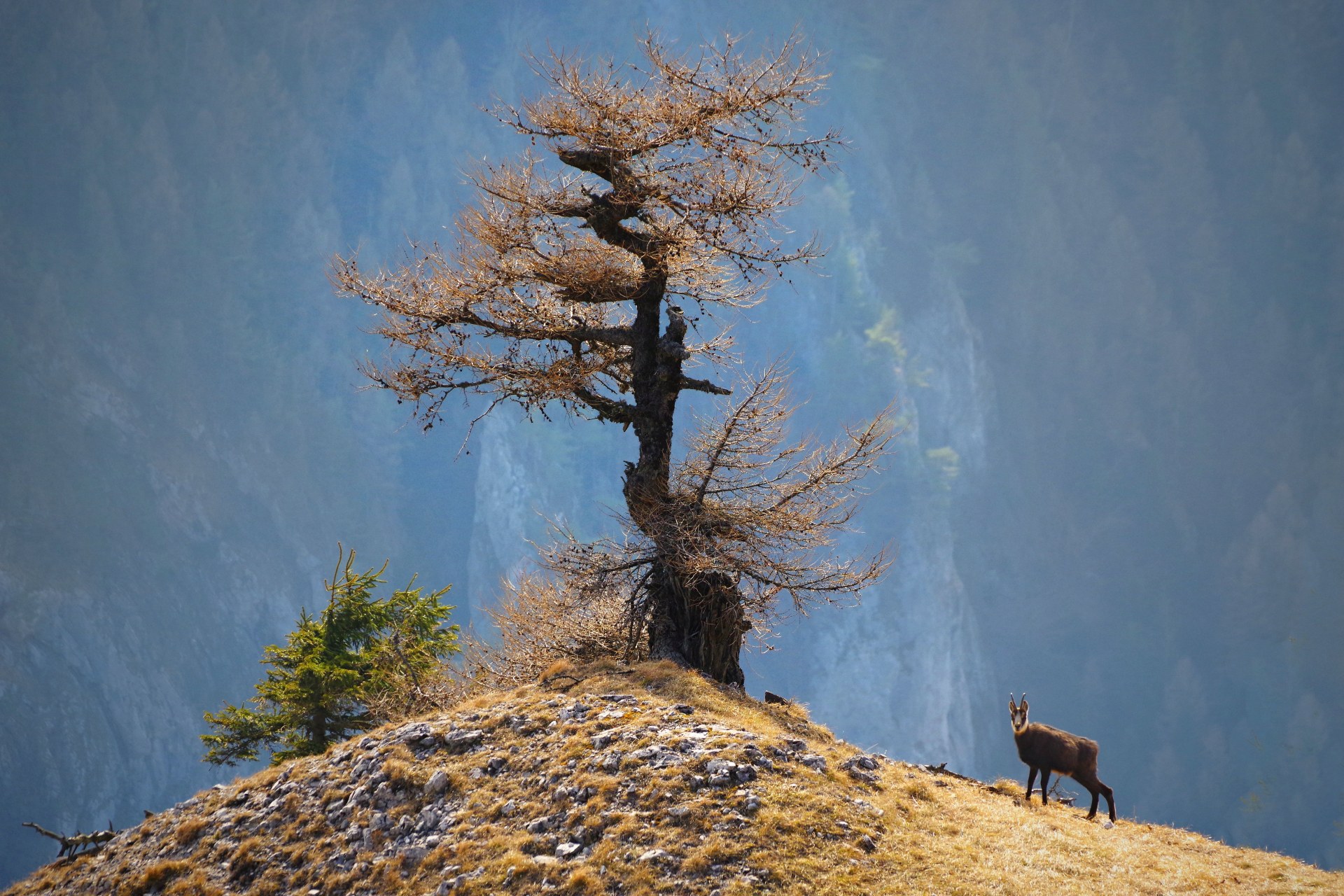
We continued to the nature trail dedicated to the fauna of Veľká Fatra, where we turned towards the Koniarka shelter and then joined the yellow hiking trail leading to the Mogury area and the local shepherds’ huts. This is where the experiential style of guiding really came into its own. Out in the field, we had the chance to learn not only about the sheep-farming process itself, but above all about the person who cares for the flock every day. The head shepherd described his daily work, caring for the flock, living conditions at the hut, and the practical challenges of keeping sheep in a mountain environment. He also spoke about livestock losses due to attacks by large carnivores—one of the real-world challenges farmers in the area face.
A highlight was tasting local sheep’s milk products. We sampled smoked and unsmoked cheeses, oštiepok, a bryndza spread, and fresh žinčica. The tasting wasn’t just a culinary add-on—it was a concrete example of how local natural resources, traditional farming, the work of local people, and a local product come together into one story of the place.
The story of a specific place
The activity also included networking among representatives of national parks. Walking the route together created a natural space for sharing experience, discussing options for experiential guiding, and looking for ways to develop similar activities in other protected areas. The practical example in Liptovské Revúce also demonstrated the potential of linking nature conservation with the local economy, traditional farming, and sustainable tourism.
“The local community is not just a recipient of visitors, but an active partner in creating the experience and interpreting the area. By involving local experts, farmers, and producers, an authentic tourism product is created—one that shares the story of a specific place with visitors while also creating space to support the local economy,” said Ivana Vasiľová.
The pilot guiding showed the potential of Liptovské Revúce as an area where nature conservation, traditional farming, the local community, cultural heritage, environmental education, and local products can be attractively connected through an engaging, experience-based approach.
The activity also confirmed that authentic stories of local people, traditional ways of farming, and products made directly in the area can be an important part of the sustainable tourism offer—and at the same time a tool for strengthening visitors’ connection to the protected area and the local community.