As every year, this spring, between the villages of Budiš – Jasenovo – Rudno, we built barriers along the 3rd class road against amphibians entering the road. After the ground thaws and when the air temperature rises to 10 °C, frogs and salamanders set out on their way to breeding sites. The problem is overcoming roads where they die en masse under the wheels of cars, as migration takes place en masse and tens to hundreds of frogs move at once under suitable conditions.
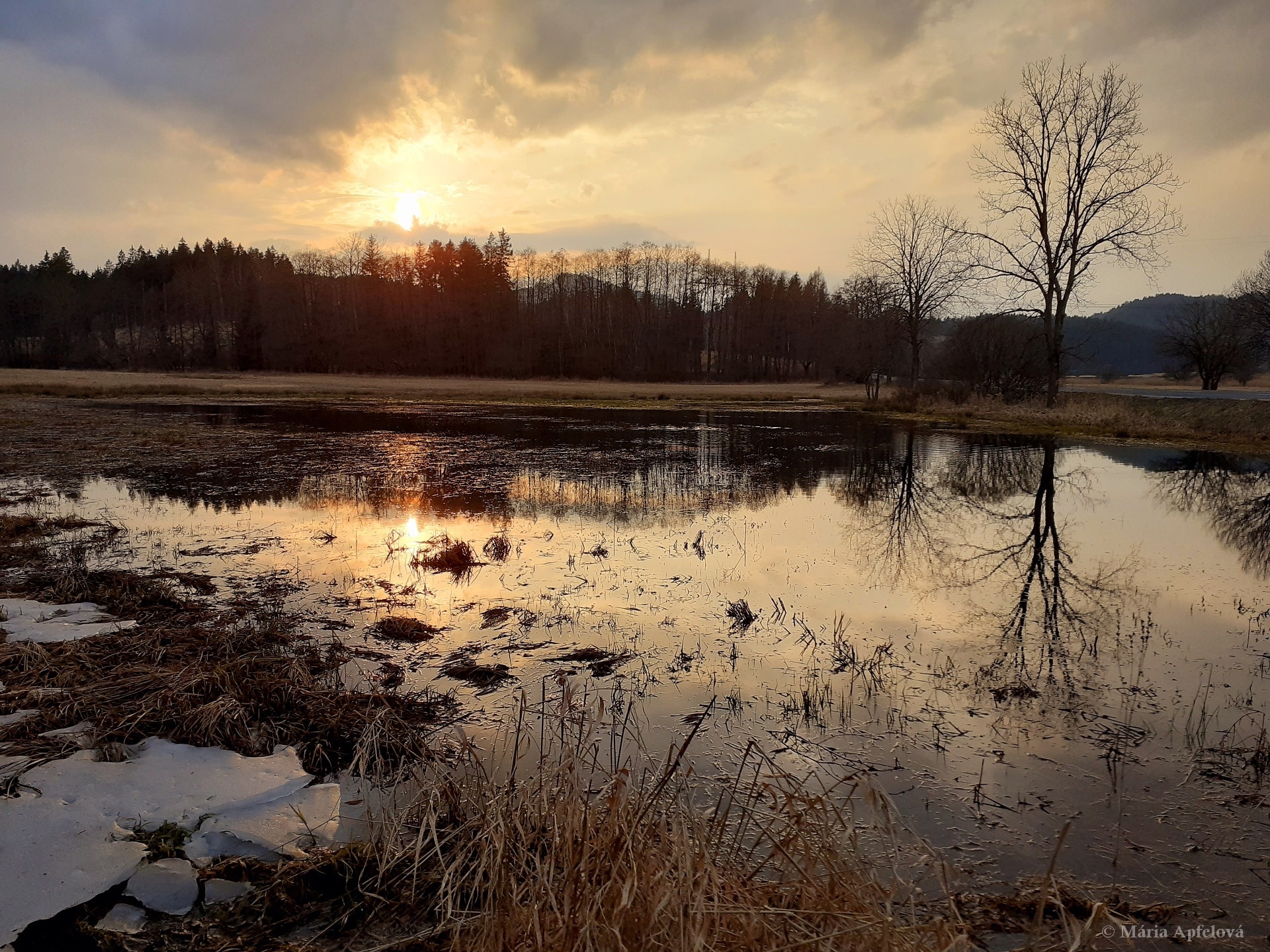
This year, we built the barriers on 2.3.2021 in advance of the migration of amphibians. The migration of frogs to breeding sites began on Friday, March 26, 2021, and by Tuesday, March 30, we had transferred 588 brown frogs (Rana temporaria) and 1 mountain salamander (Triturus alpestris) from the barriers. How long it takes for frogs and salamanders to come to the water depends on the weather and temperature. If warm and cold days alternate, the move slows down and it takes several weeks for the last frog to arrive at the breeding site. If the temperature rises for a few days and they are not alternated by frosty nights, most frogs migrate within a few days. Rain and wet weather also help the movement, during which the pull is faster. Brown frogs come to our site first, followed by salamanders, about a month later warty toads and during May green tree frogs. The success of reproduction and survival of species depends not only on the survival of the journey to the water, but also on the sufficient amount of water during the development of eggs and tadpoles. Our land is drying out, there is little snow in winter, which is also reflected in the amount of water in the traditional breeding sites of amphibians. Some dry out immediately after laying eggs, others at the stage when tadpoles are found. If the sites dry out for several years in a row, the number of amphibians decreases and this is also reflected in the number of species they serve as food. The site repeatedly dried up in 2009 -2010 – 2011, when the population was not replenished with new individuals and from 2000 jumpers during the spring transfer on the barriers we got to the number of 60 – 100 individuals. Frogs become sexually mature on average in the third year of life, so it took several more years for the local population to recover. Today, the numbers of jumpers are higher, but their fate depends on the critical period tied to development in the water. Amphibians are protected species within the meaning of the Nature and Landscape Protection Act, as well as their breeding sites – wetlands. Eggs and tadpoles are also protected – all developmental stages, as well as adults.
The water surface of the wetland also attracts other protected species such as the white stork (Ciconia ciconia), black stork (Ciconia nigra), lesser spotted eagle (Aquila pomarina), mallard (A. platyrhynchos), mallard (Anas querquedula), white wagtail (Motacila alba), mountain wagtail (M. cinerea), crested terns (Vanellus vanellus), robins (Erithacus rubecula), thrushes and others.
Frogs and salamanders, as heralds of spring, just like the stork, need a little consideration from us, the protection of wetlands and help in places where their traditional roads cross our asphalt roads are the minimum we can do for them.


Text and photos: Ing. Mária Apfelová, zoologist of the Veľká Fatra National Park
Barrier building: Július Schestág, Ľudovít Remeník, Radovan Reťkovský, Andrej Súľovský, Mária Apfelová