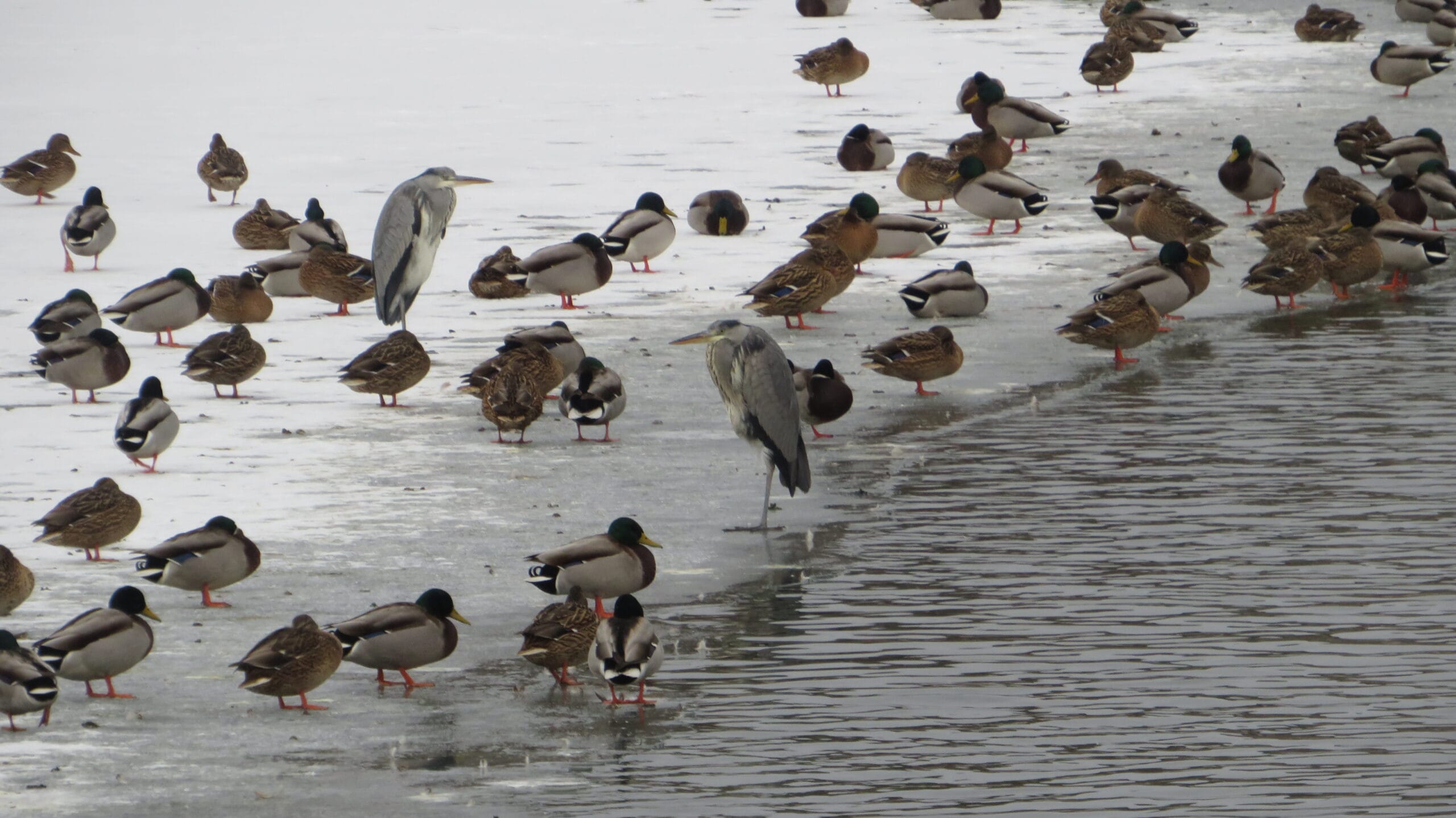
On 7.10.2024, a dead grey heron (Ardea cinerea) was found in the competence area of the Veľká Fatra National Park Administration in the urban area of the village of Dubové, Turčianske Teplice district. In accordance with the obligations arising from the Act on Nature and Landscape Protection No. 543/2021 Coll. (Section 35, paragraph 6), the local resident reported the finding of a dead protected animal to the workplace of the Administration of the Veľká Fatra National Park based in Martin. The heron did not show any signs of injury or visible damage, so we contacted the workplace of the Regional Veterinary and Food Administration (RVPS) in Martin with a request to examine it for bird flu. An examination of the heron confirmed the presence of this disease. All wild birds in Slovakia (except for urban pigeon populations) are protected animals and it is necessary to comply with the provisions of Section 35 of the Act on Nature and Landscape Protection.
During this period, the migration of birds and their concentration in large flocks takes place, where the transmission of avian influenza as well as other diseases is easier and faster. Therefore, it is necessary to report any death of wild birds to the local competent workplace of nature conservation (administration of national parks or protected landscape areas), or directly to the local competent workplace of the RVPS without appropriate protective measures. Any finding must be reported immediately. In the case of the competence area of the Administration of the Veľká Fatra National Park , you can use our emergency number 0911485308 , in the case of RVPS Martin number 0907806758. We do not recommend any handling of dead or sick birds. After contact with birds or their excrement, it is necessary to follow basic hygiene regulations – especially washing hands with soap or disinfecting them. The risk of transmission of avian influenza viruses from wild birds to the general public is low. Most cases of human infection with avian influenza viruses involved very close direct contact with sick poultry. To minimize the risk of contracting avian influenza viruses from wild birds, people should avoid touching sick or dead wild birds with their bare hands.
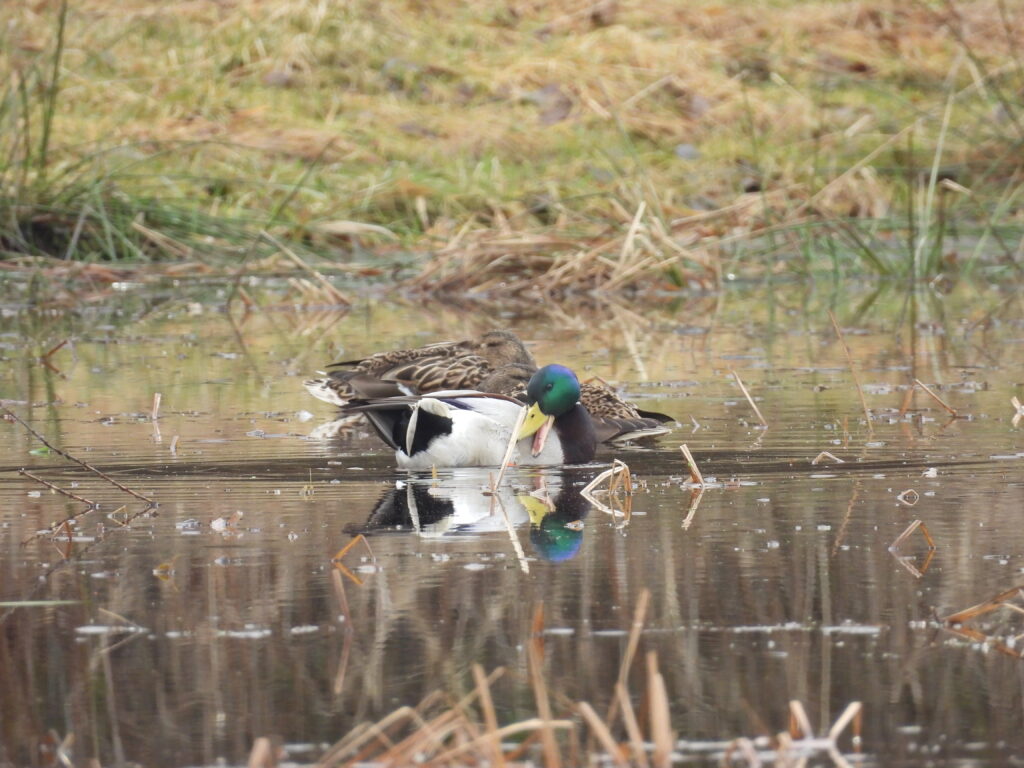
Avian influenza (avian infuenza) is an infectious viral disease of birds caused by an influenza virus that can also infect some species of mammals in, including humans. All birds are susceptible to the virus, although some species are more resistant than others. Last year, we also had a confirmed positive finding of bird flu in the eagle owl (Bubo bubo). Migratory waterfowl, and especially mallards, are a natural reservoir of bird flu and at the same time these birds are also the most resistant to infection. Domestic poultry, on the other hand, are extremely susceptible to infection. Manifestations of infection can be different in birds. In wild birds, it is a single or mass death of birds without obvious injury. The incubation period is variable, 1-7 days in the individual and 14 days at the flock level, depending on the strain of the virus, the infectious dose, the route of exposure and the species of bird. In domestic poultry, the following manifestations are suspicious:
- decrease in feed or water intake by more than 20%
- a decrease in egg production of more than 5% lasting more than 2 days
- weekly mortality rate greater than 3%
- Any clinical manifestation or post-mortem lesion that is indicative of avian influenza – sick birds often sit or stand in a semi-comatose state, with their heads touching the ground. The crests and chin lobes are cyanotic (blue) and edematous (swollen). Often severe watery diarrhea is present, and the birds are excessively thirsty. Breathing may be difficult, and excessive tearing, loss of appetite can be observed. Hemorrhages (hemorrhages) can be observed on parts of the skin that are not covered with feathers. The mortality rate in the flock varies from 50 to 100% (mass death of birds, i.e. 5 or more birds).
If an outbreak occurs in the farm, the birds must be euthanized on the site and veterinary measures are ordered. Measures are also being introduced to prevent infected birds and their products from entering the food chain, as the virus can also spread through poultry meat and eggs. In any case, thorough cooking will ensure that meat and eggs do not contain any virus. The risk of the general public being infected with the virus from live animals or poultry sayings is low and there is no reason to change eating habits.
The H5N1 strain of bird flu virus that emerged in 1997 has been identified as the most likely source of a future influenza pandemic. The risk lies in the possible mutation of this strain, which can also become transmissible from person to person, like the classic flu, which has not happened yet. In the EU, since 2006, avian influenza has mostly occurred seasonally during the winter period (October-March), usually spreading mainly one particular strain during one season. From 2022 onwards, seasonality is less pronounced and infection continues to spread in populations during the summer months, albeit to a lesser extent. Strict veterinary measures are in place in the EU. Their aim is to prevent the spread of the virus from wild birds to poultry and to reduce outbreaks in poultry. Prevention is the separation of poultry from wild birds, their habitats and the water resources they use. Stricter measures are in place in places of outbreaks of confirmed infection, which are ordered by the RVPS.
Text: Ing. Mária Apfelová – zoologist
Illustrative photo: archive of S-NPVF
Sources:
RVPS Martin Regulation No. 2336/2024-500-1796/2024 of 14.10.2024
WHO – Avian influenza (source: internet)