This year, due to the warm weather, we expected the beginning of the amphibian breeding season earlier than in other years. The administration of the Veľká Fatra National Park made barriers for frogs and salamanders near the roads in advance. Barriers are already standing on the section near Budiš on both sides of the road, in Hrabovo next to the guardrails above the outlet and near Staré Hory on the busy section between the stream and the swamp.
You can also watch a video of how it went in Hrabovo.
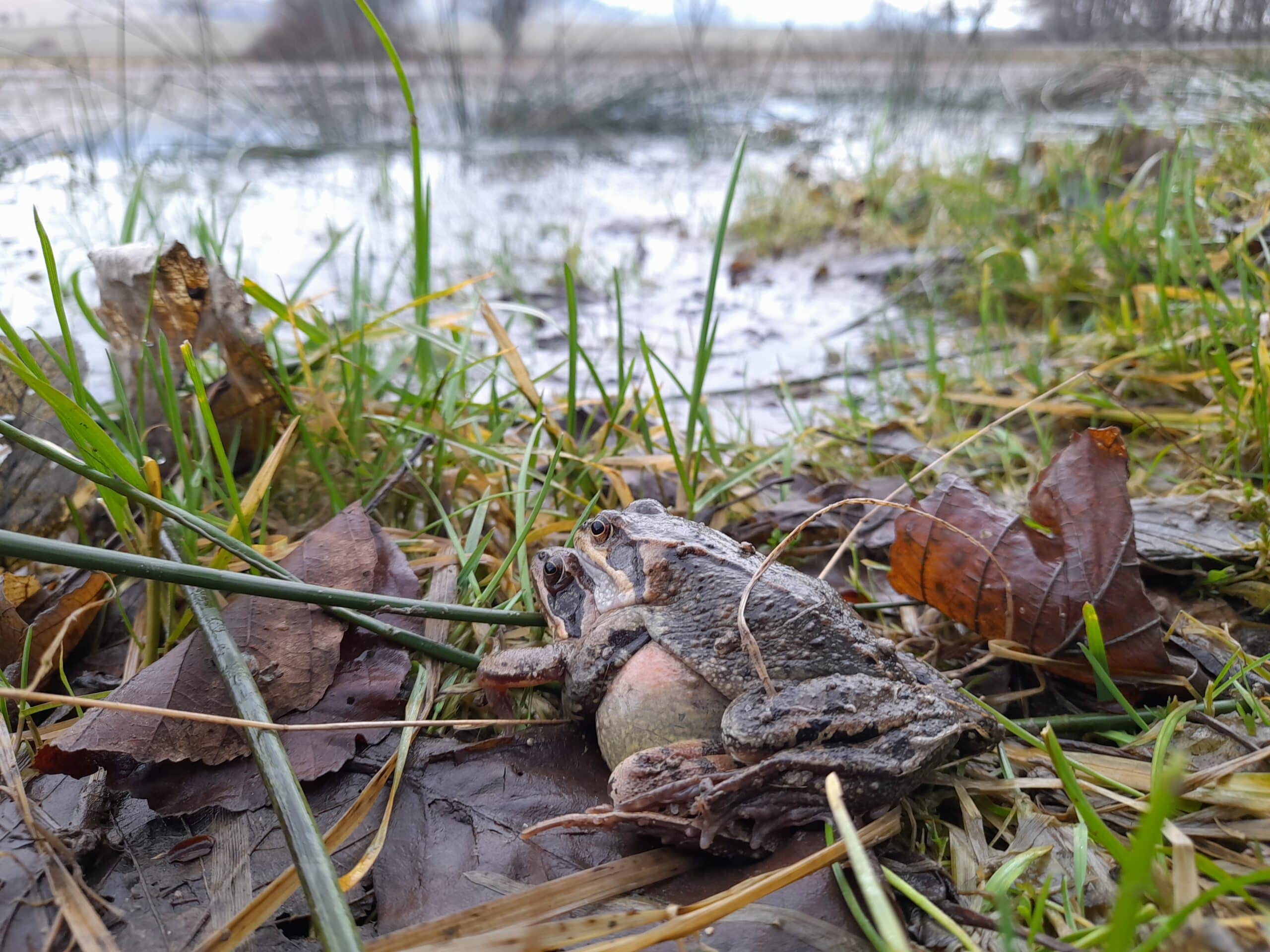
The aim of the barriers is to minimize the number of migratory individuals killed during the spring migration to the water area. These days, the site in Budiš is regularly monitored and amphibians are transferred to the water surface. In the other two locations, the barriers direct amphibians to tunnels, through which they can safely move under the road. In Budiš there are mainly (Rana temporaria), slender frogs (Rana dalmatina) and warty toads (Bufo bufo), in the locality of Hrabovo mostly warty toads. We also recorded several individuals of the spotted salamander (Triturus vulgaris) and the mountain salamander (Triturus alpestris). We ask visitors not to arbitrarily carry animals, as we are collecting the most relevant data on the abundance and species representation of amphibians at this time.


Among vertebrates, amphibians are among the most endangered groups, their abundance in our country is rapidly declining. In addition to the high mortality rate on the roads during spring migration, they are threatened mainly by the gradual loss of suitable habitats. Water bodies are drying up and disappearing either directly as a result of human activity or due to climate change. These have an impact on shifts in the precipitation regime, prolonged dry periods, which subsequently affects the success of reproduction and survival of individuals.


Amphibians need two different environments for their development and life, so they are affected by changes in both aquatic and terrestrial habitats and have an irreplaceable place in nature. Therefore, they rightly belong to important bioindicators of environmental quality.


Text: Mgr. S. Pekárová
Photo: archive of S-NPVF