In the past week, thanks to the cooperation with Stredoslovenská distribučná a.s. and Roman Slobodník, we carried out the inspection of white stork nests in Turiec and the ringing of young.
The white stork is an iconic migratory species that, thanks to its long-term coexistence with humans in the urban areas of cities and villages, has become the subject of interest of residents, superstitions, or a symbol of the arrival of spring or the arrival of children in families. In the past, it nested in trees, later it built its nests on buildings and their chimneys. Since the end of the last century, it has gradually moved its nests to power line poles, which is not safe either for the storks themselves or for the continuous supply of electricity. That is why, in cooperation with energy and distribution companies, with mayors of cities and municipalities, we have started building nesting pads on free-standing poles. Most storks in Turiec nest in safe places away from power lines.
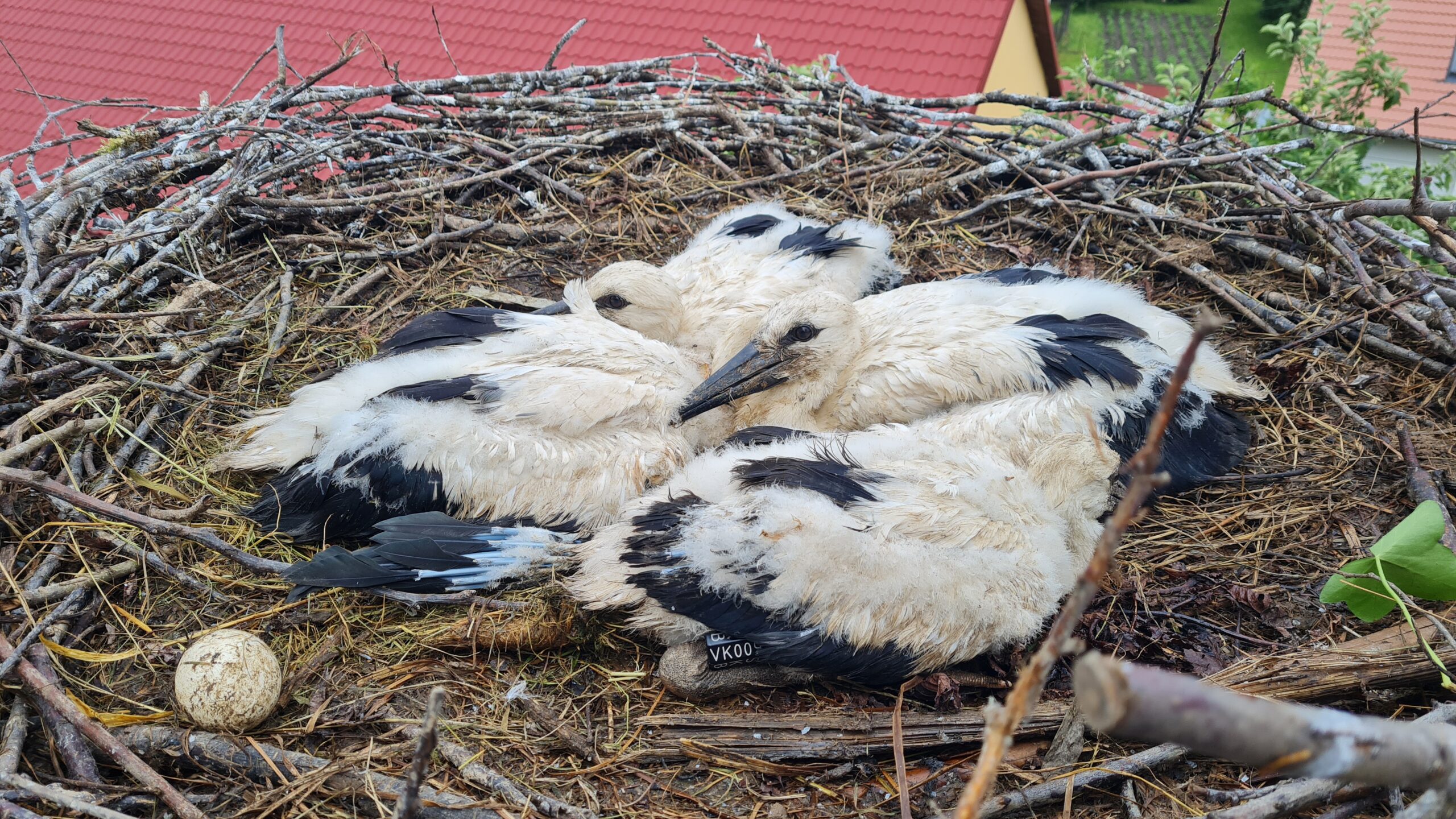
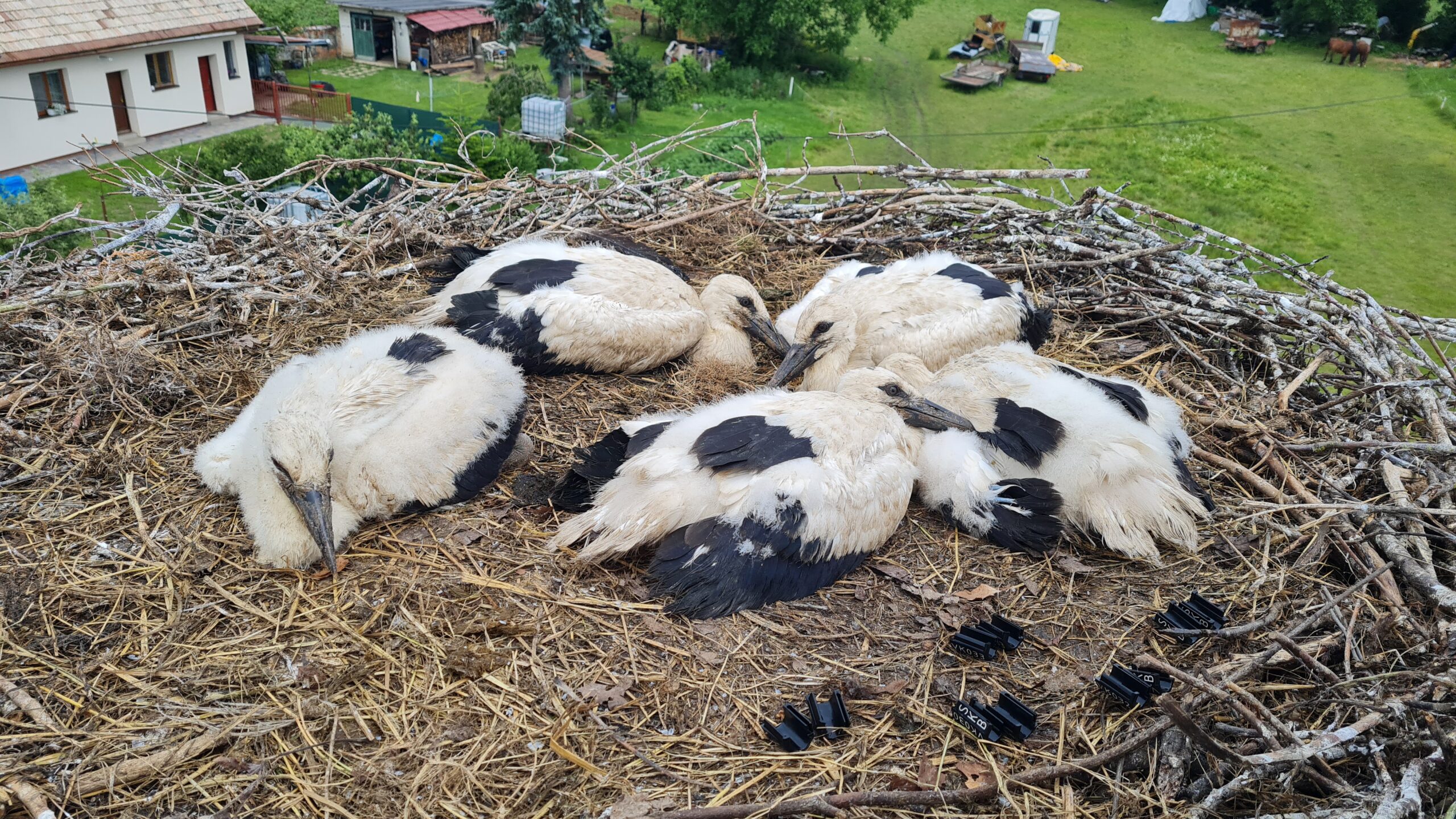
Young storks have dark-colored legs and beaks, which makes them recognizable from adults that have them red until they fly away.
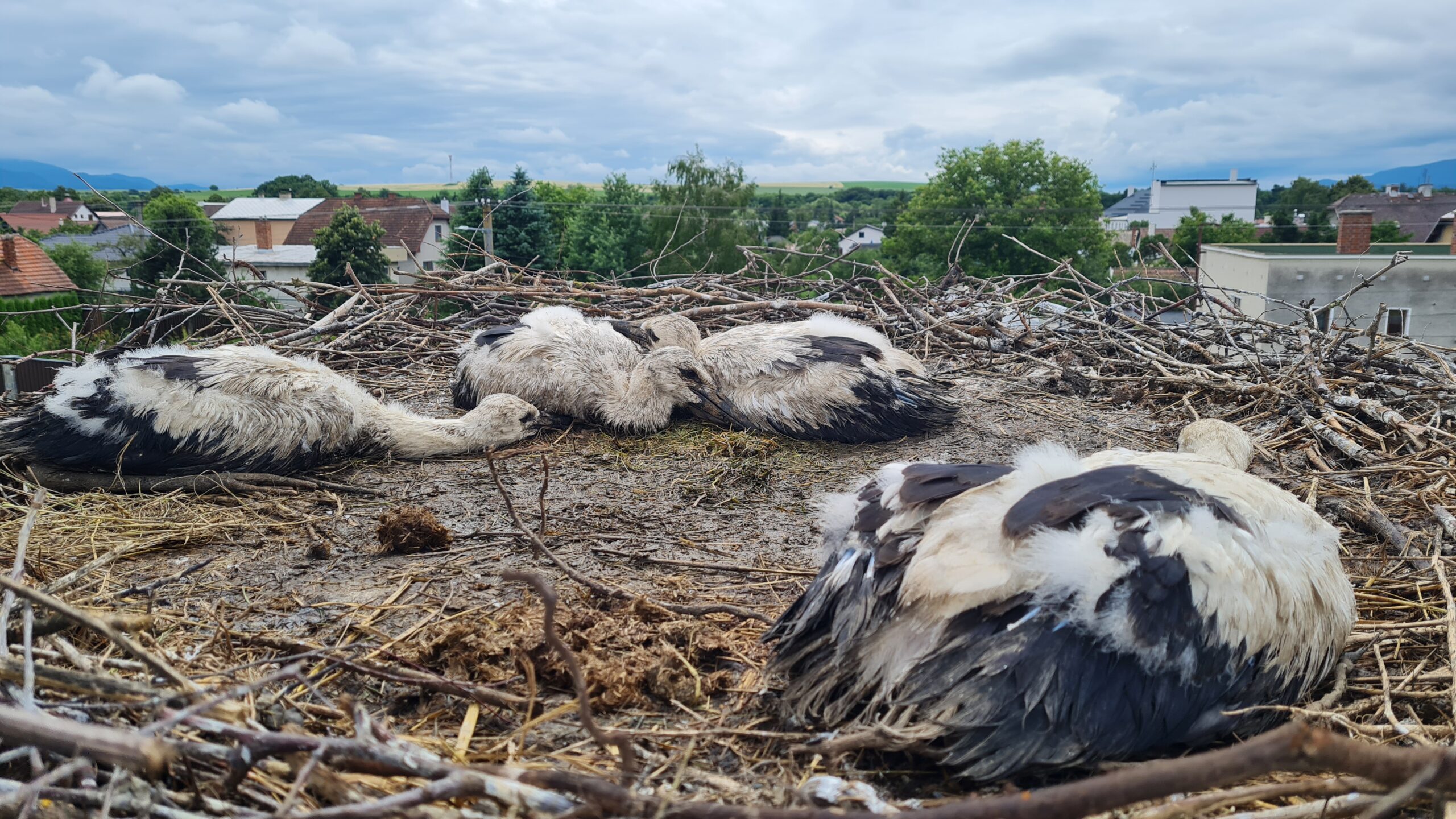
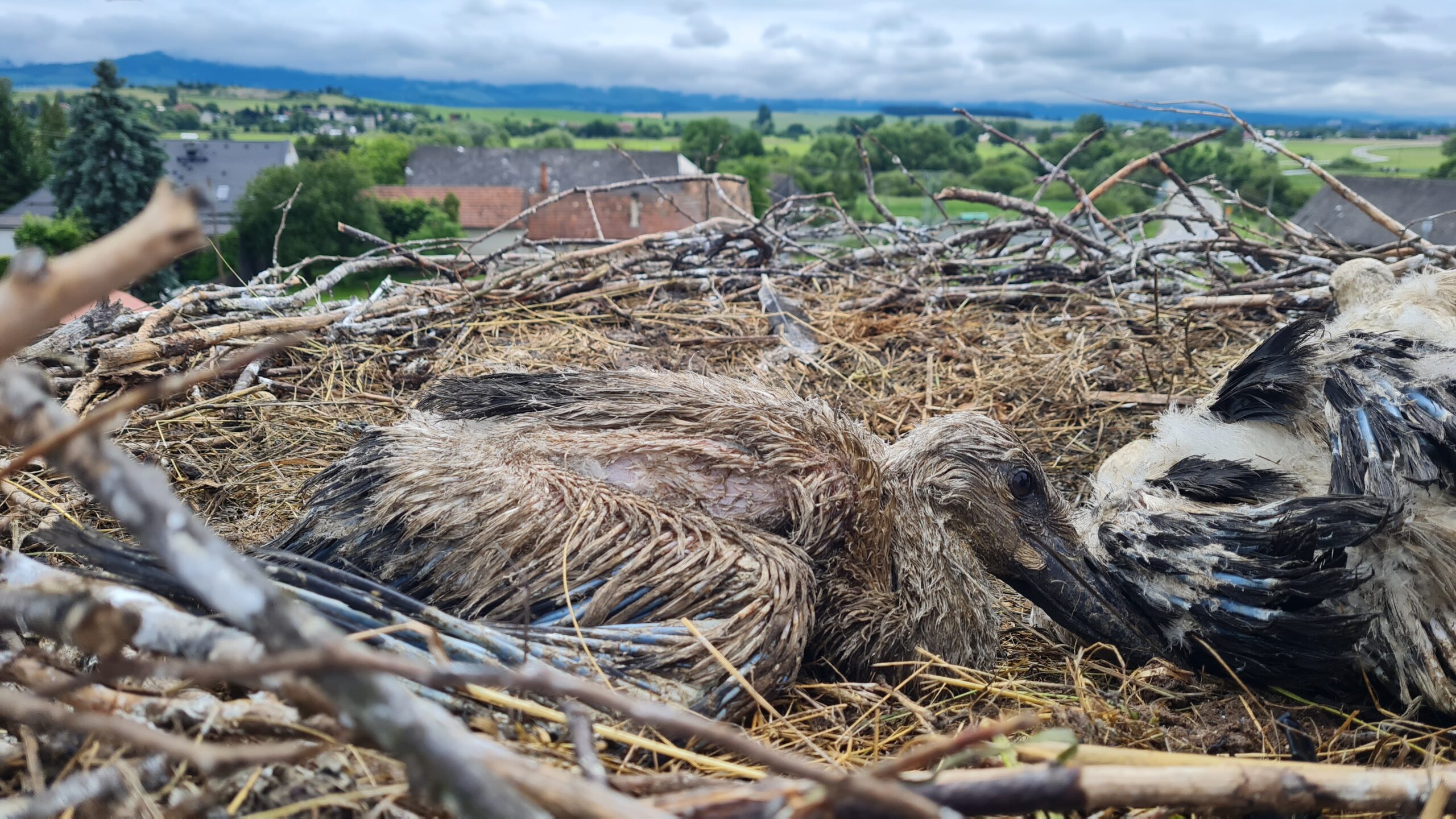
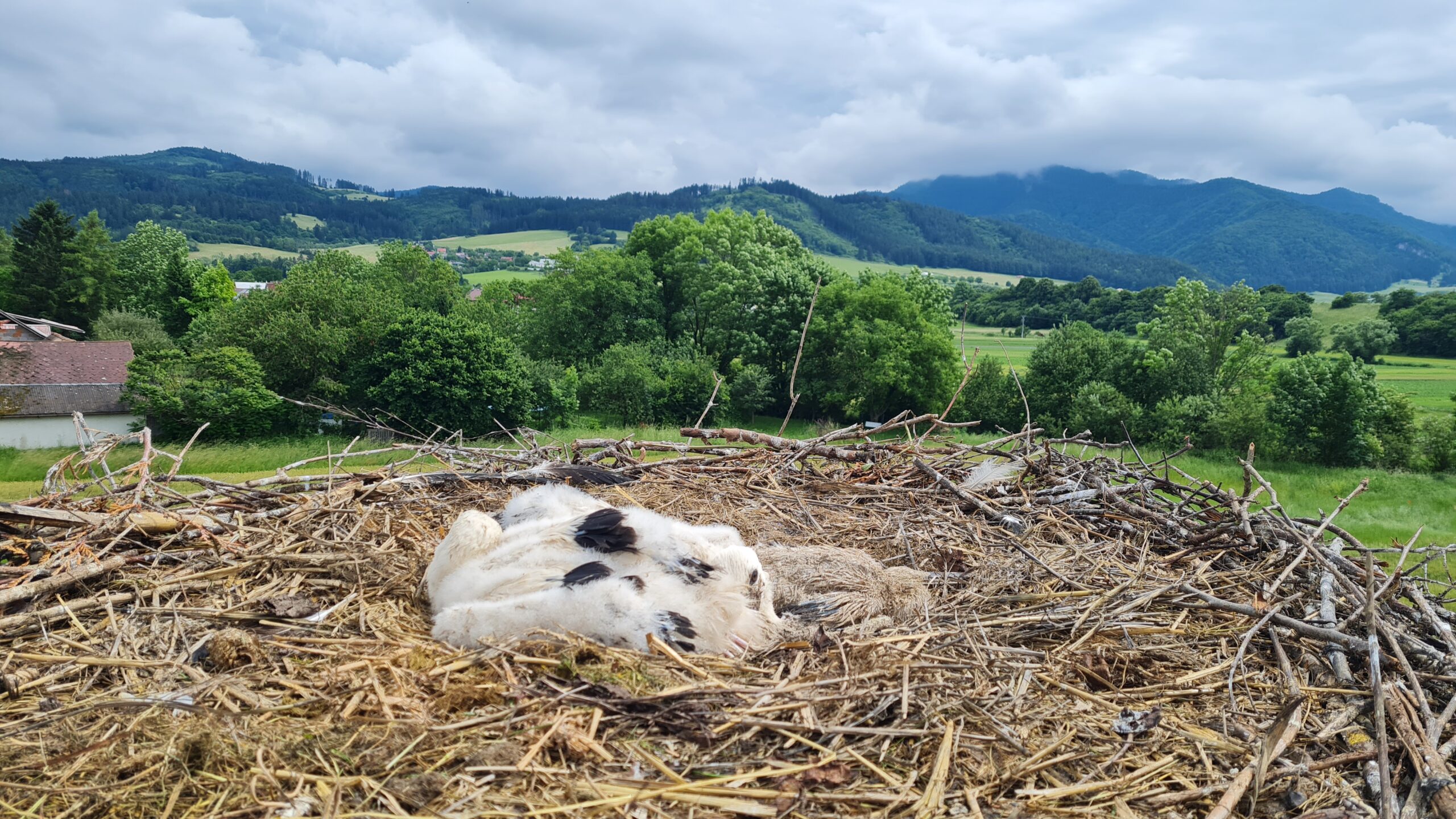
Parents protect their young from other storks and predators. At a time when the adults are not on the nest and there is danger, the chicks “play” the corpses.
This time we visited 20 nests and 50 baby storks received a ring with a unique number. The rings are large, the numbers on them can be read with the help of binoculars or a camera. If you manage to read the ring, you can send a report to kruzkysk@gmail.com . The report form and information can be found here https://www.vtaky.sk/stranka/53-Kruzkovanie.html. By reporting back, you can contribute to obtaining information about the movement of storks, new nesting sites and receive feedback.
There is a page dedicated to storks and their nests www.bociany.sk, where you can find information about any nest in Slovakia. In case of new nests found in suitable or less suitable places within the area, please contact the nature conservation office. In cooperation with the local government and residents, we will look for suitable solutions for further coexistence.
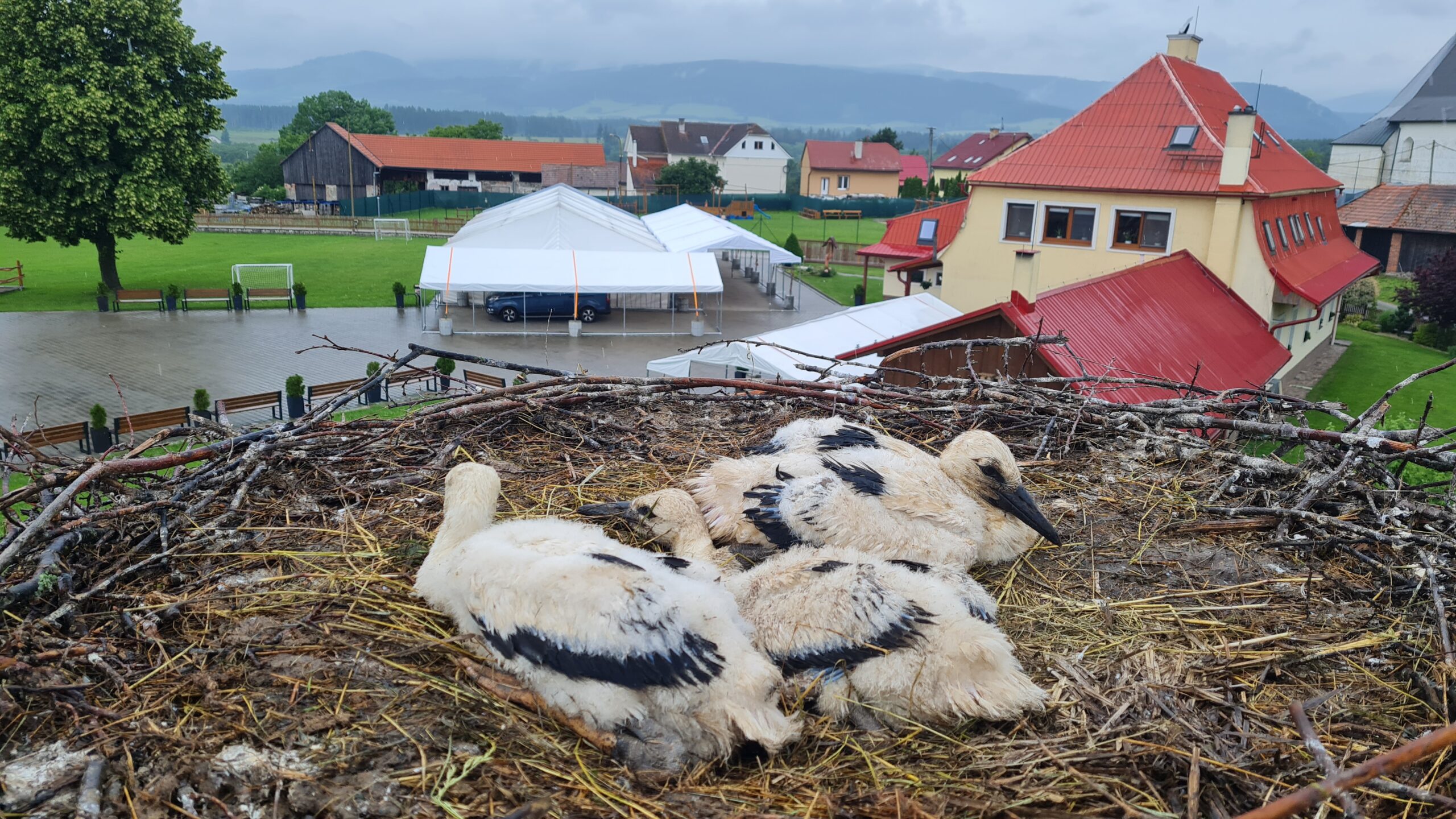
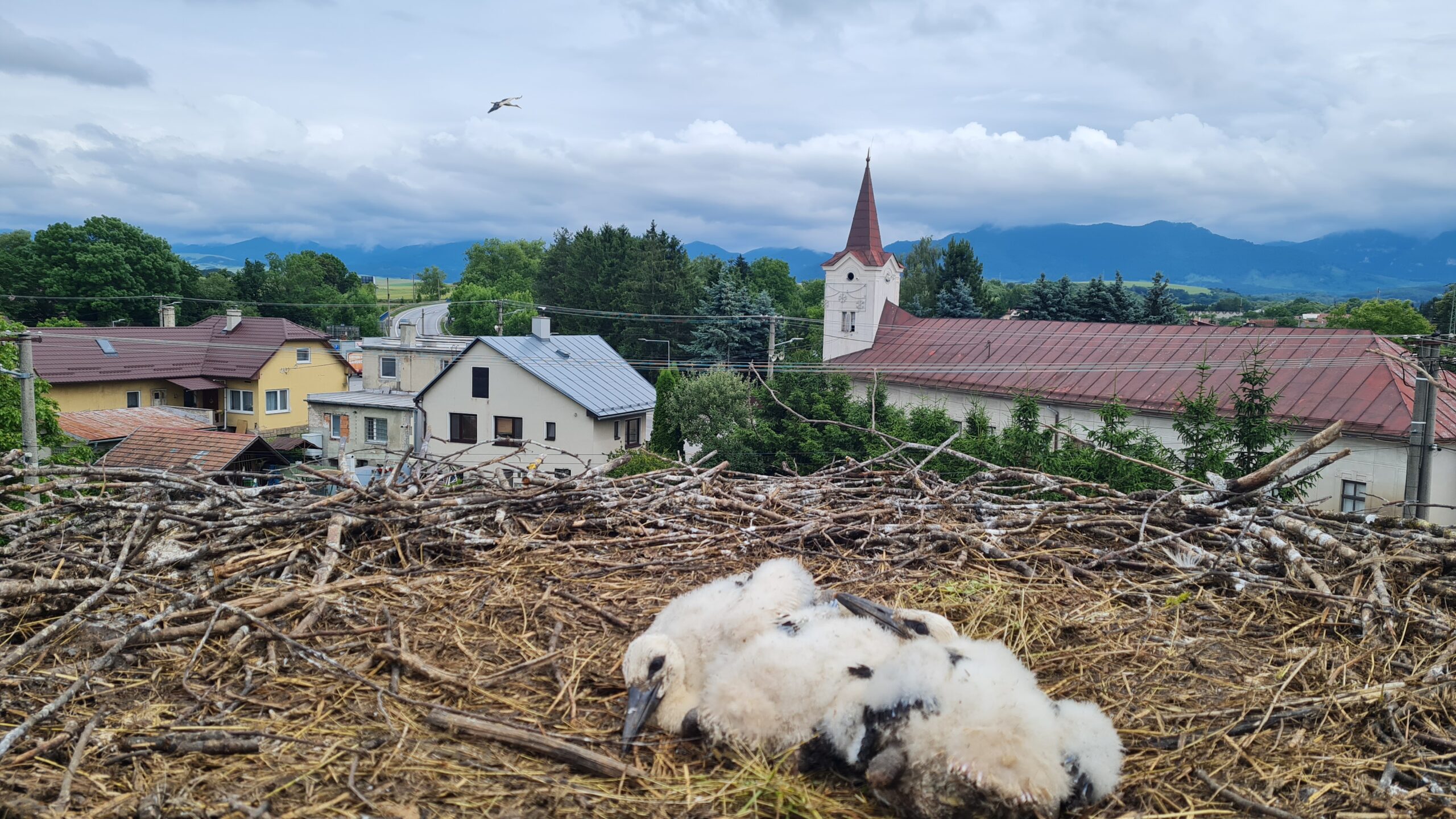
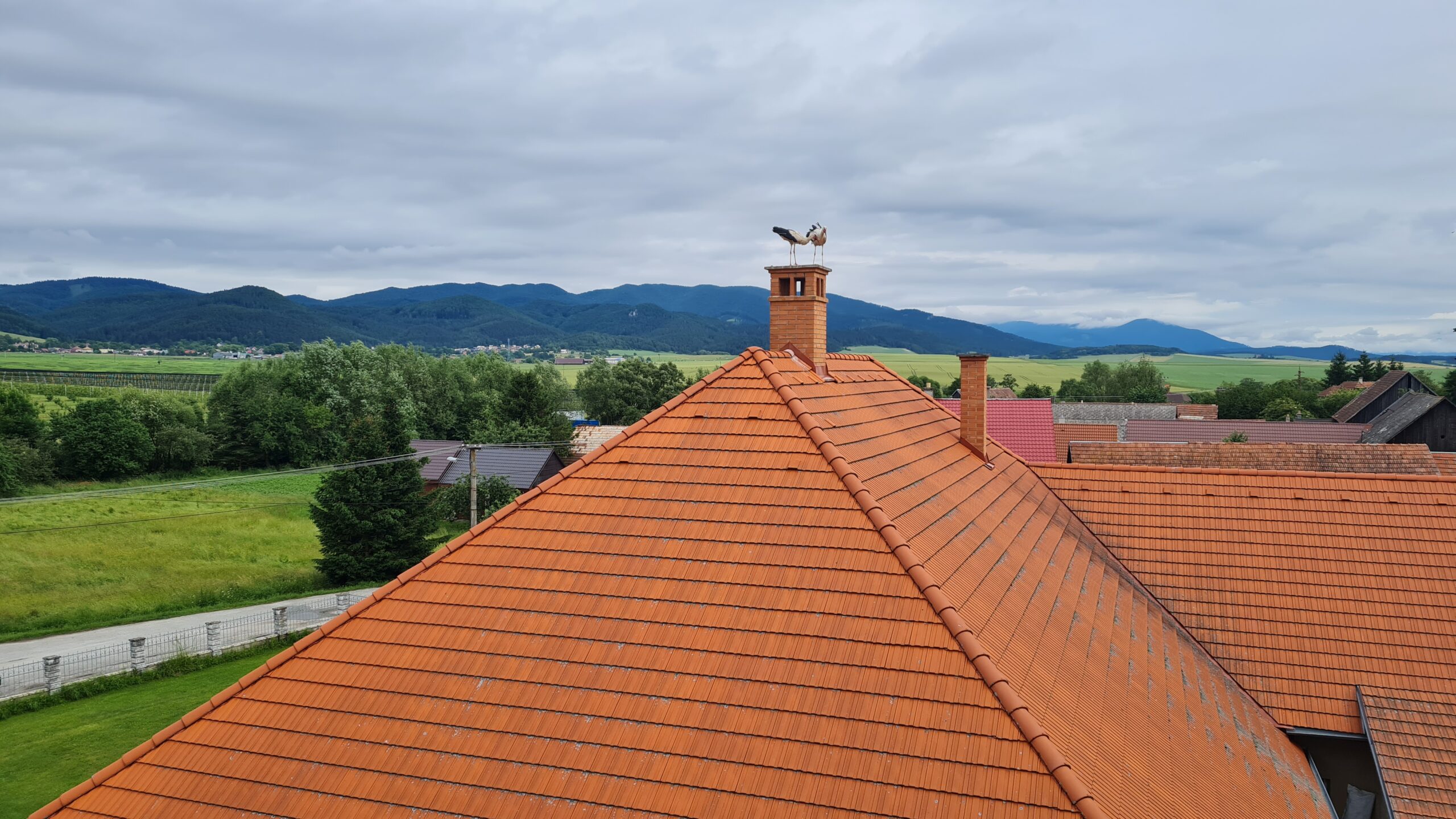
Unlike the black stork, which is shy and builds its nests in forests on trees or rocks, the white stork uses the urban areas of villages in our country for nesting.
Storks mate among wading species of birds, their food is various species of insects, amphibians, small mammals and other animal food. We ask for your indulgence in case storks are your neighbors. They use beak tapping to communicate with each other, they can “decorate the surroundings of the nest” with droppings, but they also use it to cool their legs on hot days. Observing their activities during the breeding season can brighten up your days, spark children’s interest in nature and teach them a lot about bird life.
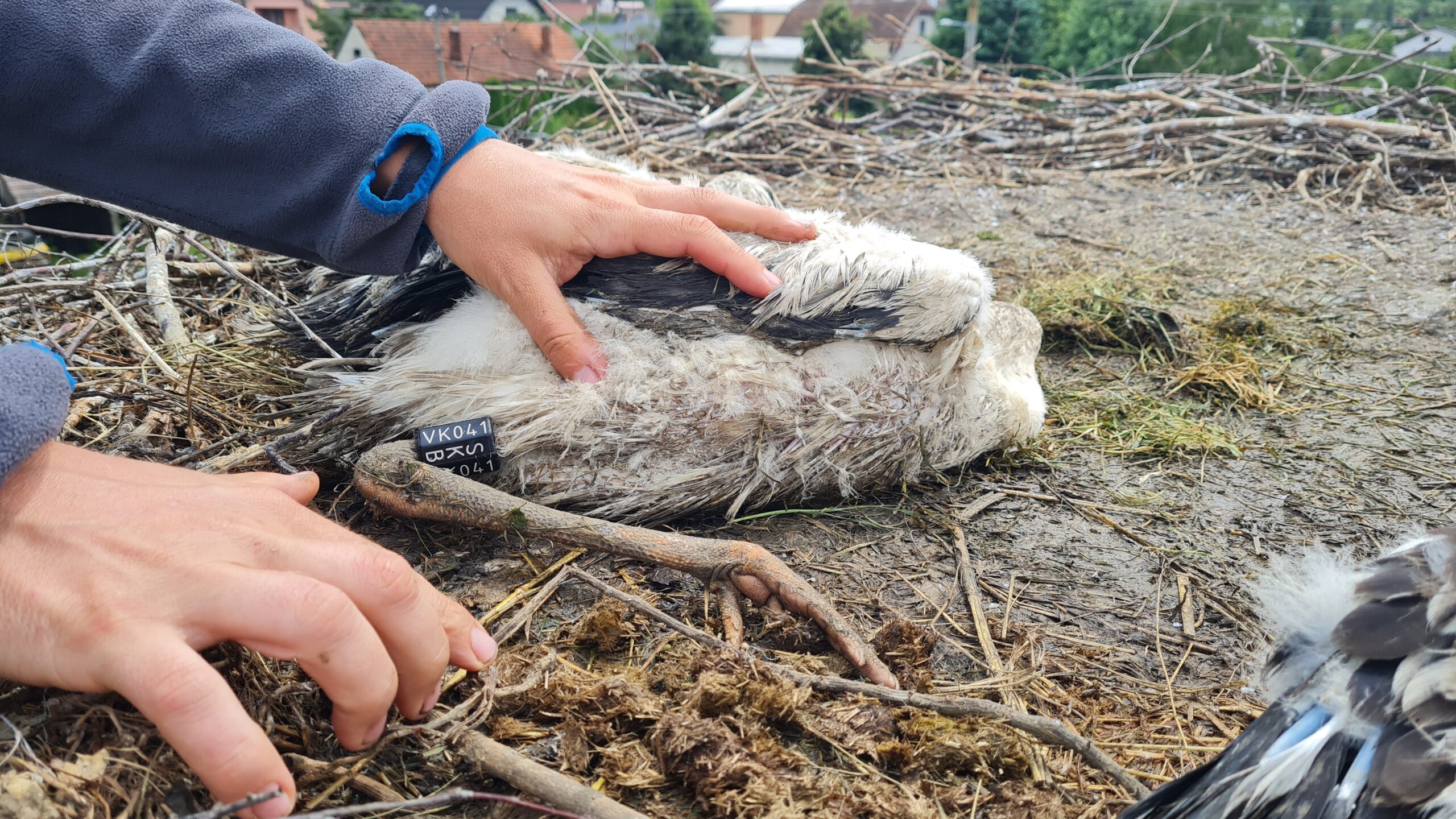
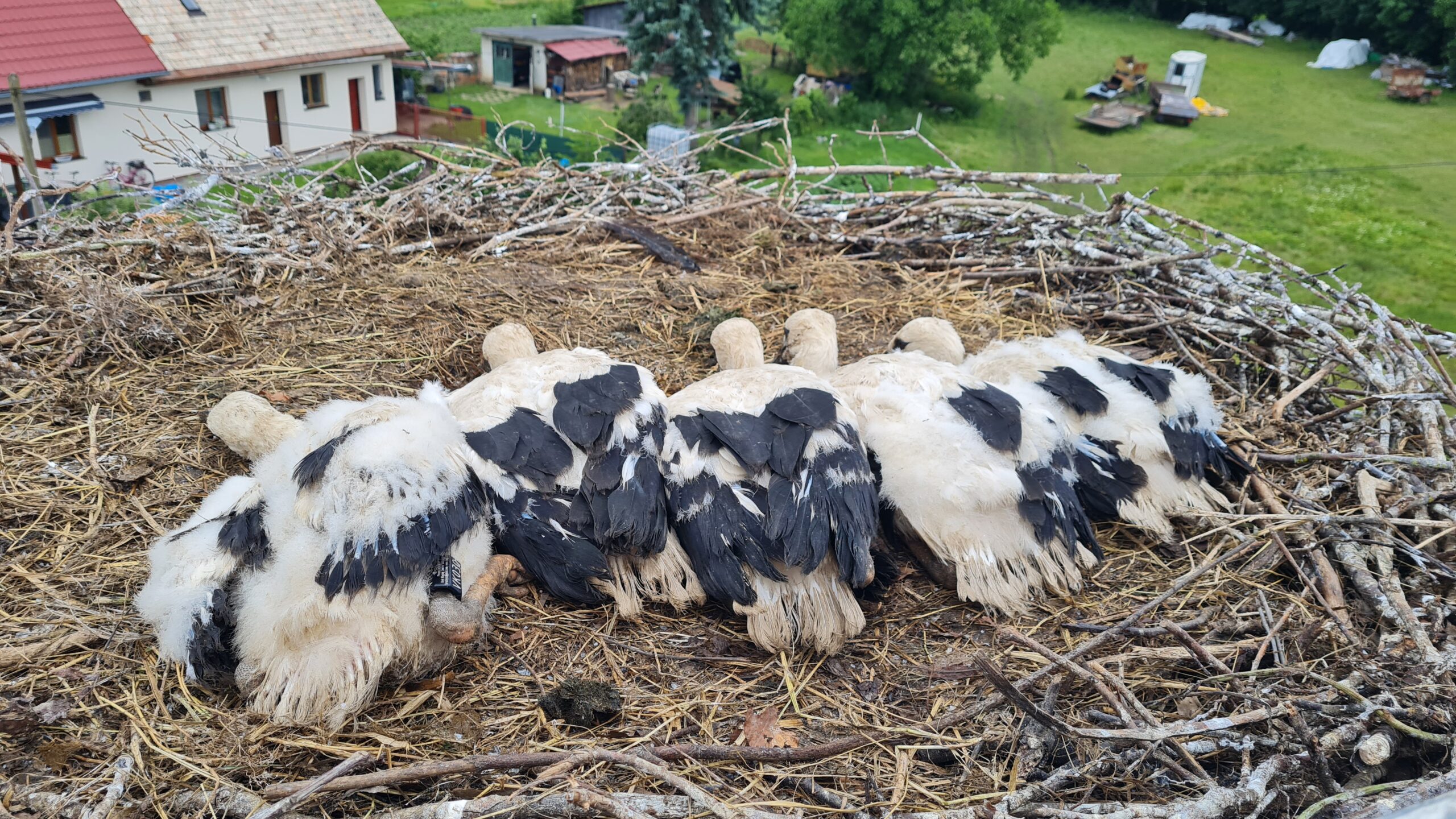
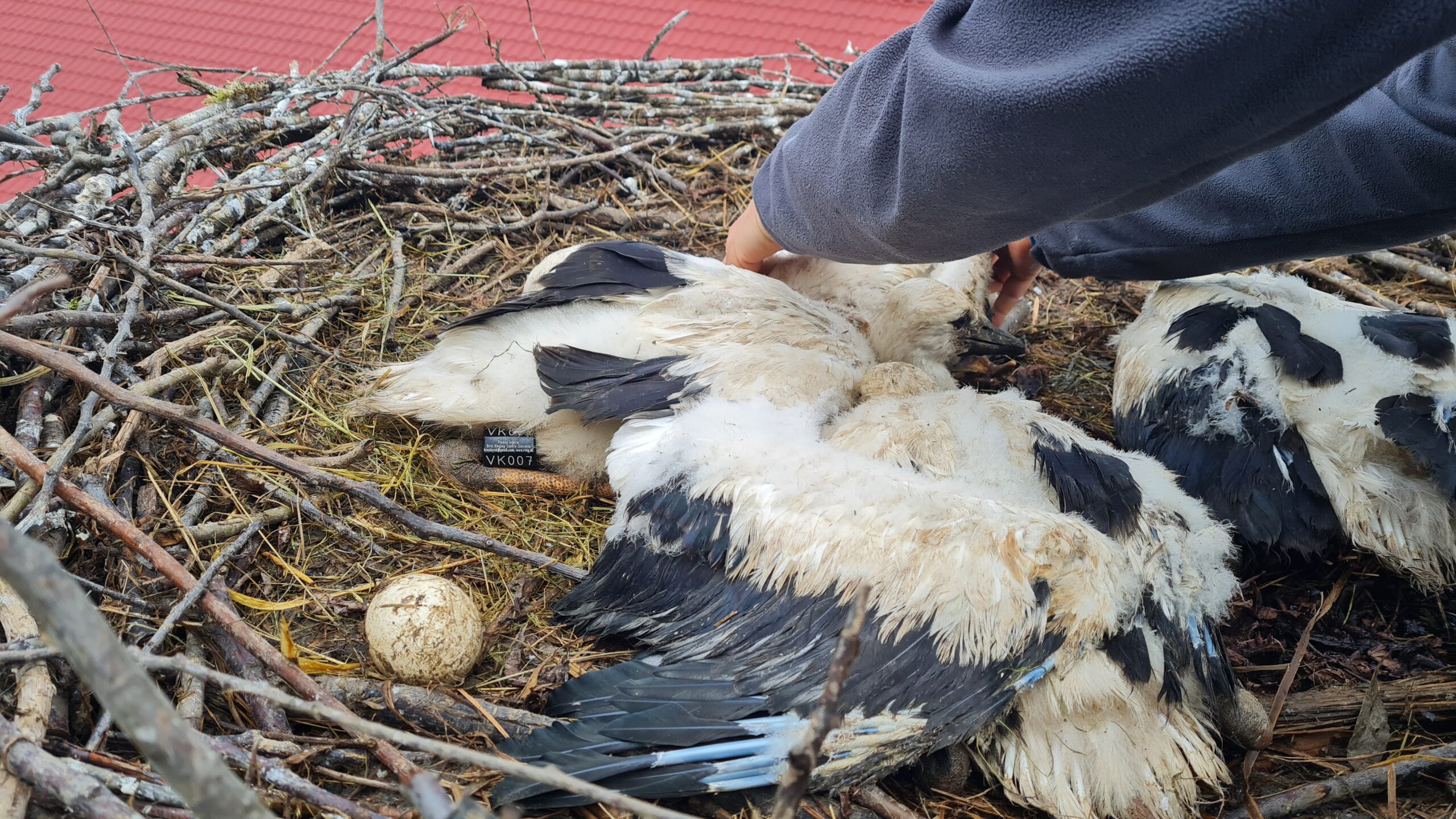
Each ring has its own unique number, according to which we can find information about the place and year of hatching of its wearer. We can find nesting storks hatched in the surrounding countries or from the opposite end of Slovakia.
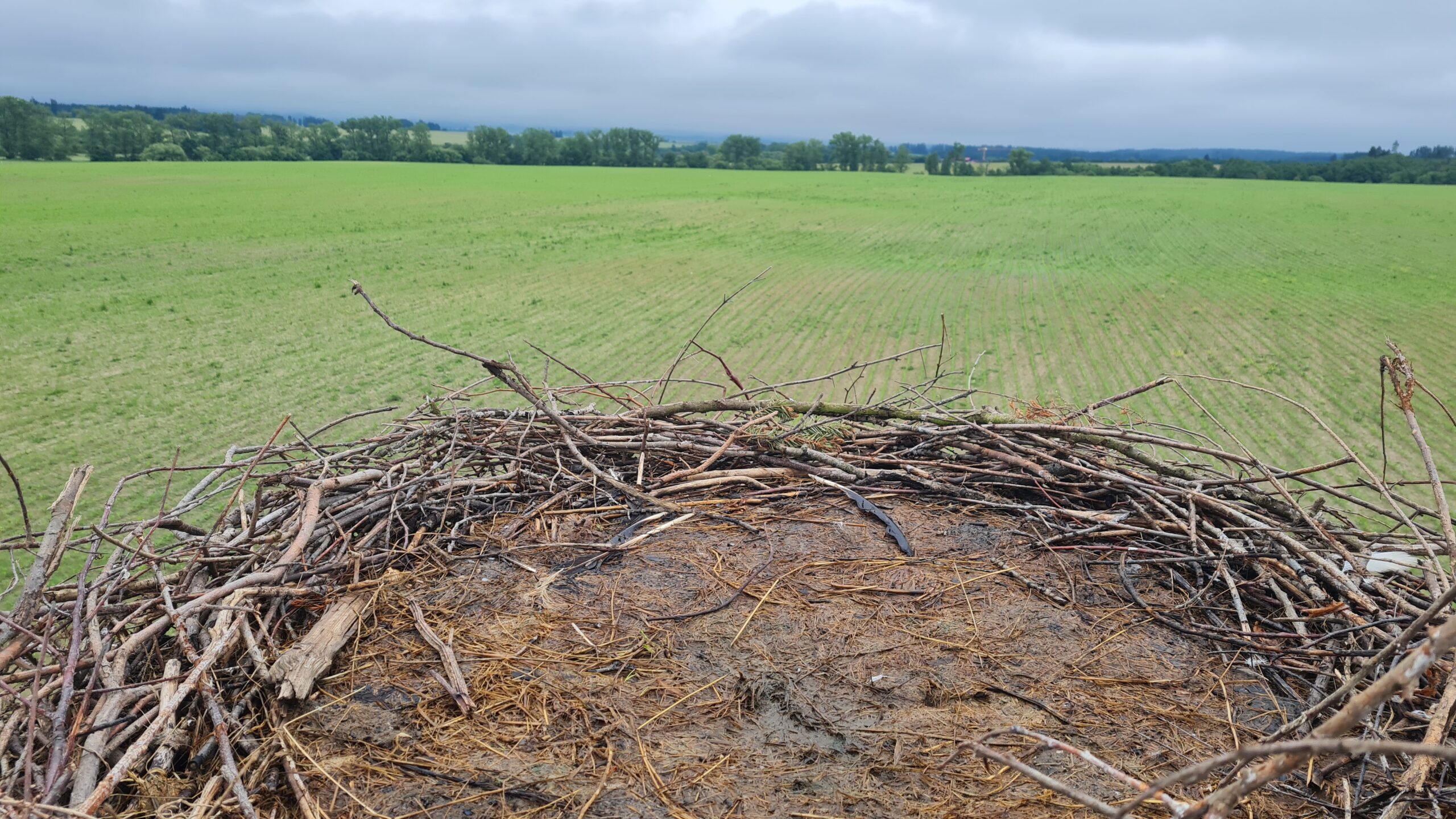
Inspection of nests is important to determine their condition and load, because the amount of material brought on them increases every year and the load on the nesting pads and poles increases. If necessary, we reduce the height of the nests outside the nesting area, which extends their lifespan. When arranging nests, parents often bring unsuitable building material such as plastic wrap or twine, in which the chicks get tangled on the nest. A strangled leg wrapped in twine then ends in the cruel death of the chicks right on the nest.
This year’s finding is also a large difference in the age of the chicks on the nests. While some already have long flight feathers and plumage similar to adult storks, in other nests there are only chicks in fluff or even eggs, which the stork mother still warms. The cold and rainy spring also took its toll on several dead chicks or cold eggs. However, it will not harm the stork population. On the contrary – natural selection will allow storks to find their space to live and enough food sources for future young.
Text: Ing. M. Apfelová
Photo: archive of S-NPVF